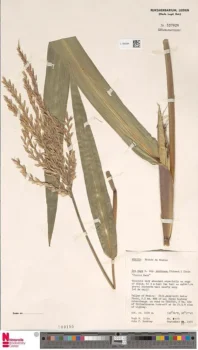
Mexican Teosinte: The Wild Ancestor of Corn That’s Making Waves in American Gardens
If you’ve ever wondered what corn looked like before thousands of years of human cultivation transformed it into the plump kernels we know today, meet Mexican teosinte (Zea mexicana). This fascinating grass is like stepping back in time – it’s essentially corn’s wild great-great-great (add a few thousand more greats) grandmother, and it’s showing up in gardens across the southeastern United States.
What Exactly Is Mexican Teosinte?
Mexican teosinte is an annual grass that belongs to the same genus as modern corn. While you might know it by its scientific name Zea mexicana, it’s also been called Euchlaena mexicana or classified as Zea mays subspecies mexicana in some botanical circles. Think of it as corn’s scrappy, wild cousin – it has the same basic DNA but with a completely different attitude.
Unlike the neat rows of kernels on a corn cob, Mexican teosinte produces small, hard seeds that are individually wrapped in tough outer shells. It’s like nature’s version of individually packaged snacks, except these snacks helped give rise to one of the world’s most important food crops.
Where You’ll Find Mexican Teosinte Growing
Originally hailing from Mexico and Central America, Mexican teosinte has established itself in several southeastern states including Alabama, Florida, and Maryland. As a non-native species that reproduces on its own in the wild, it’s found its niche in the American landscape, though it’s not considered native to these areas.
- Species observed
- No observations
Should You Plant Mexican Teosinte in Your Garden?
Here’s where things get interesting. Mexican teosinte occupies a unique space in the gardening world – it’s not native, but its invasive status isn’t clearly established. If you’re drawn to this historical curiosity, there are a few things to consider:
The Case for Growing Mexican Teosinte
- Educational value: It’s a living piece of agricultural history that can spark fascinating conversations about plant domestication
- Architectural interest: This tall grass can reach impressive heights and adds vertical structure to large garden spaces
- Minimal maintenance: As an annual, it completes its life cycle in one growing season without requiring long-term commitments
- Unique appearance: The distinctive seed heads and corn-like leaves create visual interest in wild or naturalized gardens
Consider Native Alternatives
While Mexican teosinte has its charms, supporting native ecosystems is always a great choice. Consider these native grass alternatives that offer similar height and architectural interest:
- Big bluestem (Andropogon gerardii) – a stunning prairie grass with beautiful fall color
- Switchgrass (Panicum virgatum) – versatile and gorgeous with airy seed heads
- Indian grass (Sorghastrum nutans) – golden plumes that practically glow in autumn light
Growing Mexican Teosinte Successfully
If you decide to grow Mexican teosinte, here’s what you need to know to keep it happy:
Growing Conditions
- Sunlight: Full sun is non-negotiable – this grass loves to bask in direct sunlight all day long
- Soil: Well-draining soil is key; it’s not picky about soil type but won’t tolerate waterlogged conditions
- Climate: Best suited for USDA zones 8-11, as it needs warm temperatures and is sensitive to frost
- Space: Give it room to grow – this isn’t a plant for small spaces or tidy borders
Planting and Care Tips
- Timing: Direct seed in spring after the soil has warmed up and frost danger has passed
- Planting depth: Sow seeds about 1/2 to 1 inch deep in prepared soil
- Watering: Water regularly during establishment, then reduce frequency as the plant matures
- Fertilizing: Generally doesn’t need much supplemental feeding if grown in reasonably fertile soil
- Maintenance: Very low-maintenance once established – just let it do its thing
What to Expect
Mexican teosinte is wind-pollinated, so don’t expect it to attract lots of bees and butterflies like flowering plants do. However, the seeds can provide food for birds and small wildlife. The plant will complete its entire life cycle in one growing season, producing seeds that may self-sow in favorable conditions.
The Bottom Line
Mexican teosinte is definitely a conversation starter – a plant that bridges the gap between wild nature and human agriculture. While it’s not native to North American ecosystems, it’s not clearly problematic either. If you have the space and curiosity, it can be an interesting addition to educational gardens or large naturalized areas.
Just remember that supporting native plant communities is always beneficial for local wildlife and ecosystem health. Whether you choose Mexican teosinte for its historical significance or opt for a native grass alternative, you’re adding valuable structure and interest to your landscape. The choice, as they say, is entirely yours to make.