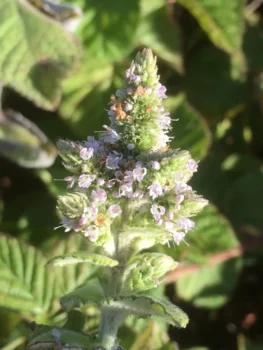
Apple Mint: The Fuzzy-Leaved Herb That’s Taking Over Gardens (In a Good Way!)
If you’ve ever brushed against a plant and been surprised by its incredibly soft, almost velvety leaves, you might have encountered apple mint (Mentha ×villosa). This delightfully fuzzy member of the mint family brings both charm and controversy to gardens across North America – and once you plant it, you’ll understand why gardeners have such strong opinions about this aromatic perennial.
What Exactly Is Apple Mint?
Apple mint, botanically known as Mentha ×villosa, is a perennial herb that’s part of the mint family. You might also see it listed under several synonyms including Mentha alopecuroides or Mentha nemorosa in older gardening references. As a forb – essentially a non-woody plant that dies back to the ground each winter – apple mint returns year after year with renewed vigor.
What sets this mint apart from its smooth-leaved cousins is its distinctive fuzzy texture and subtle apple-like fragrance when the leaves are crushed. The soft, gray-green foliage feels almost like velvet between your fingers, making it a tactile delight in any garden setting.
Where Does Apple Mint Come From?
Here’s where things get interesting from a native gardening perspective: apple mint isn’t actually native to North America. This European import has established itself across a wide range of locations, from coast to coast. You’ll find naturalized populations thriving in California, Oregon, and Washington on the West Coast, throughout the Midwest in states like Illinois, Indiana, Michigan, and Wisconsin, and across the Northeast from Maine down to Pennsylvania.
The plant has also made itself at home in Canada, Hawaii, Puerto Rico, and the U.S. Virgin Islands. Essentially, if there’s suitable habitat, apple mint has probably found a way to grow there.
- Species observed
- No observations
The Water-Loving Nature of Apple Mint
One of apple mint’s most notable characteristics is its relationship with water. Depending on your region, this plant ranges from loving wetlands to tolerating drier conditions:
- In most regions (Atlantic Coast, Caribbean, Eastern Mountains, Hawaii, Midwest, and Western Mountains), it’s classified as an Obligate Wetland plant, meaning it almost always grows in wetlands
- In the Northeast and North-central regions, it’s more flexible, able to grow in both wet and dry conditions
- In the Arid West, it’s considered Facultative Wetland, usually preferring moist areas but capable of surviving in drier spots
Should You Plant Apple Mint in Your Garden?
This is where apple mint gets complicated. On one hand, it’s a wonderfully aromatic herb that attracts pollinators like bees and butterflies with its small, clustered white to pale purple flowers. The soft leaves make excellent additions to teas, fruit salads, and mojitos, while the plant itself can serve as an effective ground cover in moist, shaded areas.
On the other hand, apple mint has earned a reputation as an aggressive spreader. Like most mints, it reproduces through underground runners (rhizomes) and can quickly take over large areas if left unchecked. Many gardeners plant it only to discover it popping up everywhere they don’t want it.
Growing Apple Mint Successfully (And Keeping It Under Control)
If you decide to grow apple mint, here are some key strategies for success:
Ideal Growing Conditions
- Light: Partial shade to full sun (adapts well to various light conditions)
- Soil: Moist, well-draining soil; thrives in consistently damp conditions
- Hardiness: Generally hardy in USDA zones 4-9
- Water: Keep consistently moist; this plant loves water
Containment Strategies
- Plant in containers or raised beds with barriers
- Install root barriers around planting areas
- Regularly harvest and trim to prevent flowering and seed production
- Monitor for runners and remove them promptly
Care Tips
- Pinch off flower buds to encourage leaf production and prevent self-seeding
- Cut back hard in late fall or early spring
- Divide clumps every few years to maintain vigor
- Mulch around plants to retain moisture
Native Alternatives to Consider
While apple mint isn’t native to North America, there are some wonderful native alternatives that can provide similar benefits:
- Wild Mint (Mentha arvensis): North America’s only native mint species
- Mountain Mint (Pycnanthemum species): Native aromatic herbs that attract pollinators
- Wild Bergamot (Monarda fistulosa): Native mint-family plant with showy flowers
- American Wild Mint (Mentha canadensis): Another native option with similar growing requirements
The Bottom Line on Apple Mint
Apple mint can be a delightful addition to the right garden situation. Its soft, fragrant foliage and pollinator-friendly flowers make it appealing, especially in herb gardens, cottage-style landscapes, or rain gardens where its water-loving nature is an asset rather than a challenge.
However, this is definitely a plant with caution situation. If you have a small garden, prefer low-maintenance plants, or want to focus on native species, apple mint might not be your best choice. But if you have space, enjoy aggressive herbs, and don’t mind doing some management, apple mint can provide years of aromatic enjoyment.
Just remember: once you plant mint, you’ll always have mint. Whether that’s a blessing or a curse depends entirely on your perspective and gardening goals!