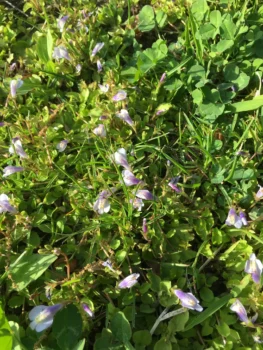
Miquel’s Mazus: A Delicate Ground Cover with Old World Charm
If you’re searching for a dainty ground cover that produces charming little flowers, you might have stumbled across Miquel’s mazus (Mazus miquelii). This petite perennial has been quietly making itself at home in gardens across several U.S. states, though it’s not originally from around these parts.
What Exactly Is Miquel’s Mazus?
Miquel’s mazus is a low-growing perennial forb – basically a soft-stemmed plant without woody tissue that comes back year after year. You might also see it listed under its synonym, Mazus reptans. This little plant forms spreading mats and produces delicate purple-blue flowers with distinctive white throats that are sure to catch your eye.
Where Does It Come From?
Originally hailing from East Asia, including China, Japan, and Korea, this non-native species has established itself in the wild across eight U.S. states. You can find naturalized populations in Maine, Massachusetts, Michigan, New Jersey, New York, North Carolina, Pennsylvania, and West Virginia – quite the geographic spread for such a small plant!
- Species observed
- No observations
The Appeal Factor
What makes Miquel’s mazus garden-worthy? Here’s what catches most gardeners’ attention:
- Delicate purple-blue flowers with contrasting white throats
- Low-growing, mat-forming habit perfect for ground cover
- Small, oval leaves that create a neat, tidy appearance
- Perennial nature means it returns each growing season
- Attracts small pollinators like bees to your garden
Where Miquel’s Mazus Shines in the Garden
This diminutive charmer works wonderfully in several garden settings:
- Rock gardens: Its low profile won’t overwhelm delicate alpine plants
- Woodland gardens: Thrives in the dappled shade under trees
- Between stepping stones: Creates living mortar between pathway stones
- Naturalized areas: Blends well in informal, wild-style gardens
Growing Conditions and Care
Miquel’s mazus is refreshingly low-maintenance once you understand its preferences:
- Light: Partial shade to full shade works best
- Soil: Moist, well-draining soil keeps it happiest
- Climate: Hardy in USDA zones 5-8
- Moisture: Consistent moisture is key – it doesn’t like to dry out completely
- Maintenance: Very low once established
Planting and Care Tips
Getting Miquel’s mazus established is straightforward:
- Plant in spring after the last frost
- Space plants about 6-12 inches apart for ground cover
- Water regularly during the first growing season
- Mulch lightly to retain moisture
- Watch for self-seeding – it may spread naturally
- The plant can also spread via creeping stems
The Non-Native Consideration
Since Miquel’s mazus isn’t native to North America, you might want to consider native alternatives that provide similar benefits to local ecosystems. Some lovely native ground covers to explore include wild ginger (Asarum canadense), partridgeberry (Mitchella repens), or native violets (Viola species) depending on your region.
Bottom Line
Miquel’s mazus offers gardeners a charming, low-maintenance ground cover option with pretty flowers and reliable perennial growth. While it’s not native, it doesn’t appear to be aggressively invasive either. Whether you choose to grow it or opt for native alternatives, the key is creating a garden that brings you joy while supporting local wildlife. If you do decide to give this little Asian transplant a try, you’ll likely find it to be an agreeable garden companion that asks for little but gives back plenty of delicate beauty.