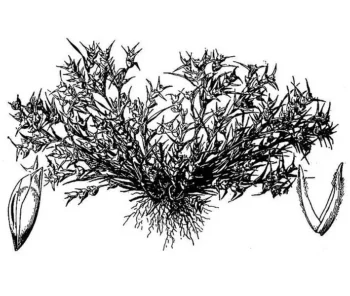
Modest Prickle Grass: An Uncommon Wetland Annual for Specialized Gardens
If you’re looking for a grass that won’t win any beauty contests but serves a specific ecological niche, meet modest prickle grass (Crypsis vaginiflora). This unassuming annual might not be the star of your garden show, but it has carved out a unique role in wetland environments across California and Idaho.
What Is Modest Prickle Grass?
Modest prickle grass, also known as African pricklegrass, is a small annual grass that lives up to its humble name. This non-native species originally hails from Africa and Mediterranean regions but has established itself in wetland areas of the western United States. As its scientific name Crypsis vaginiflora suggests (you might also see it listed under older names like Crypsis aculeata or Sporobolus niliaca), this grass keeps a relatively low profile in the plant world.
Where You’ll Find It Growing
Currently, modest prickle grass has been documented growing wild in California and Idaho, where it has naturalized in suitable wetland habitats. This grass is quite particular about its living conditions—it’s classified as an Obligate Wetland plant in both the Arid West and Western Mountains regions, meaning it almost always occurs in wetlands.
- Species observed
- No observations
Should You Plant Modest Prickle Grass?
Here’s the honest truth: most gardeners probably won’t fall head-over-heels for modest prickle grass. Its aesthetic appeal is, well, modest at best. This small, inconspicuous grass produces narrow leaves and tiny spike-like flower clusters that won’t exactly wow your neighbors.
However, there are some specific situations where you might consider this plant:
- You’re creating a specialized wetland garden or restoration project
- You have consistently wet areas that need plant coverage
- You’re interested in unusual grasses for educational or botanical collections
- You want plants that thrive in seasonal pools or marsh edges
Since modest prickle grass isn’t native to North America and offers limited wildlife benefits (it’s wind-pollinated, so it doesn’t provide much for pollinators), you might want to consider native wetland grasses instead. Options like native sedges, rushes, or regional wetland grasses would provide similar functions while supporting local ecosystems.
Growing Modest Prickle Grass Successfully
If you decide to grow modest prickle grass, success hinges on one critical factor: water, water, water. This plant demands consistently moist to wet growing conditions.
Ideal Growing Conditions:
- Moisture: Wet soils, marsh edges, or areas with standing water
- Climate: Likely suited for USDA zones 8-11 based on its current distribution
- Soil: Tolerates various soil types as long as they stay wet
- Maintenance: Minimal—this annual will self-seed if conditions are right
Planting and Care Tips:
- Plant in spring when soil temperatures warm up
- Ensure consistent moisture throughout the growing season
- Allow plants to self-seed for natural regeneration
- No fertilization typically needed in wetland conditions
The Bottom Line
Modest prickle grass is definitely a niche plant for specialized situations. While it’s not invasive or noxious, it’s also not going to be the centerpiece of most garden designs. If you have the right wet conditions and are interested in unusual plants, it could be an interesting addition. However, for most gardeners looking to support local wildlife and ecosystems, native wetland plants would be a better choice.
Remember, the best gardens often include a mix of showstoppers and supporting players—and sometimes the modest ones have their own quiet charm.