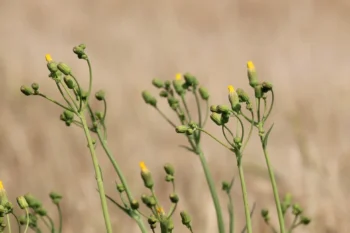
Moist Sowthistle: Understanding This Widespread Non-Native Perennial
If you’ve spotted tall, yellow-flowered plants popping up in moist areas around your property, you might be looking at moist sowthistle (Sonchus arvensis uliginosus). This perennial forb has made itself quite at home across North America, despite being a non-native species originally from Europe and western Asia.
What Is Moist Sowthistle?
Moist sowthistle is a herbaceous perennial that belongs to the sunflower family. As a forb, it lacks significant woody tissue and maintains its perennating buds at or below ground level. Don’t let the name fool you—while it prefers moist conditions, this adaptable plant can establish itself in various environments once it gets a foothold.
Where You’ll Find It
This non-native species has spread extensively across North America since its introduction. You can find moist sowthistle established in most Canadian provinces and U.S. states, from Alaska down to Texas and from coast to coast. It reproduces spontaneously in the wild and tends to persist once established.
- Species observed
- No observations
Should You Grow Moist Sowthistle?
Here’s where things get interesting. While moist sowthistle isn’t typically grown as an ornamental plant, it does have some redeeming qualities that might make you think twice before automatically removing it:
- Produces bright yellow, dandelion-like flowers that attract pollinators including bees and butterflies
- Extremely hardy and low-maintenance once established
- Tolerates a wide range of growing conditions
- Can help stabilize soil in disturbed areas
However, as a non-native species, many gardeners prefer to choose native alternatives that provide similar benefits while supporting local ecosystems more effectively.
Growing Conditions and Care
If you’re dealing with existing moist sowthistle or considering it for a naturalized area, here’s what you need to know:
Preferred Conditions:
- Thrives in moist soils but adapts to various soil types
- Performs well in USDA hardiness zones 3-9
- Tolerates both sun and partial shade
- Often found in disturbed areas, field edges, and along waterways
Care Requirements:
- Requires minimal care once established
- Spreads readily through underground rhizomes
- Self-seeds readily in favorable conditions
- May require management to prevent unwanted spread
Native Alternatives to Consider
Since moist sowthistle is non-native, you might want to consider these native alternatives that offer similar pollinator benefits:
- Wild bergamot (Monarda fistulosa) for sunny, moist areas
- New England aster (Symphyotrichum novae-angliae) for fall color and pollinator support
- Swamp milkweed (Asclepias incarnata) for wet areas and monarch butterfly support
- Cardinal flower (Lobelia cardinalis) for moist, shaded locations
The Bottom Line
Moist sowthistle is one of those plants that sits in the middle ground—not necessarily harmful, but not the best choice for intentional planting either. If you already have it on your property and it’s not causing problems, it does provide some pollinator value. However, if you’re planning new plantings, choosing native species will better support your local ecosystem while providing similar or greater benefits.
Remember, good gardening is about working with nature, and sometimes that means making thoughtful choices about which non-native species earn their place in our landscapes.