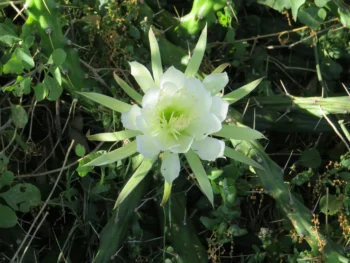
Mooncactus (Harrisia martinii): A Night-Blooming Beauty for Warm Climate Gardens
If you’re looking for a dramatic cactus that puts on a spectacular nighttime show, the mooncactus might catch your attention. This striking columnar cactus, scientifically known as Harrisia martinii, brings an exotic flair to warm-climate gardens with its impressive nocturnal blooms and distinctive architectural form.
What is Mooncactus?
Mooncactus is a perennial shrub-like cactus that typically grows as a multi-stemmed woody plant, usually reaching heights of 13 to 16 feet under ideal conditions. You might also encounter this plant listed under its former scientific names, including Cereus martinii and Eriocereus martinii, but Harrisia martinii is the currently accepted botanical name.
The real magic happens after dark when this cactus produces large, fragrant white flowers that open at night – hence the moon in its common name. These nocturnal blooms are followed by colorful fruits that add another layer of visual interest to your landscape.
Native Status and Geographic Distribution
Here’s something important to know: mooncactus isn’t actually native to the United States. This South American native hails from Argentina and Paraguay, but it has established itself in Hawaii, where it now reproduces spontaneously in the wild without human intervention.
Currently, you’ll find naturalized populations of mooncactus growing in Hawaii, where the tropical climate suits its needs perfectly.
- Species observed
- No observations
Should You Plant Mooncactus in Your Garden?
The decision to plant mooncactus comes with a few considerations. While it’s not currently listed as invasive or noxious, its ability to reproduce and persist in the wild means you’ll want to think carefully about your local ecosystem.
Reasons you might choose mooncactus:
- Stunning night-blooming flowers with incredible fragrance
- Excellent drought tolerance once established
- Architectural interest and sculptural form
- Low maintenance requirements
- Thrives in challenging, dry conditions
Reasons to consider alternatives:
- Non-native species that may not support local wildlife as effectively
- Limited cold tolerance restricts where it can be grown
- Potential to spread beyond your garden in suitable climates
Native Alternatives to Consider
If you love the idea of a dramatic night-blooming cactus but prefer to stick with native plants, consider looking into native cacti species in your region. Many areas have indigenous columnar cacti or night-blooming species that provide similar aesthetic appeal while supporting local ecosystems.
Growing Conditions and Care
If you decide mooncactus is right for your garden, here’s what it needs to thrive:
Climate Requirements: Mooncactus is only suitable for USDA hardiness zones 9b through 11, making it a plant for tropical and subtropical regions. It cannot tolerate frost, so cold-climate gardeners will need to treat it as a container plant that winters indoors.
Sun and Soil:
- Full sun exposure for best growth and flowering
- Well-draining soil is absolutely essential – soggy conditions will kill this cactus
- Sandy or rocky soils work particularly well
- Tolerates poor, nutrient-deficient soils
Water Requirements: Once established, mooncactus is remarkably drought tolerant. Water deeply but infrequently, allowing the soil to dry completely between waterings. Overwatering is one of the fastest ways to harm this plant.
Planting and Care Tips
Planting:
- Choose a location with excellent drainage – consider raised beds or slopes
- Plant after the last frost date in your area
- Space plants adequately to allow for their eventual size
- Add coarse sand or gravel to heavy soils to improve drainage
Ongoing Care:
- Minimal fertilization needed – excessive nutrients can actually harm the plant
- Protect from frost in marginal climates
- Watch for overwatering signs like soft, yellowing stems
- Pruning is rarely necessary except to remove damaged portions
Garden Design and Landscape Use
Mooncactus works beautifully as a specimen plant where its dramatic form can be appreciated. It’s perfect for:
- Desert and xeriscape gardens
- Rock gardens with Mediterranean themes
- Low-water landscape designs
- Areas where you want architectural, sculptural interest
- Night gardens where you can enjoy the evening fragrance
Wildlife and Pollinator Considerations
While mooncactus does produce nectar-rich flowers that can attract night-flying moths and potentially bats, remember that as a non-native species, it may not provide the same ecological benefits as indigenous plants. Local pollinators and wildlife have evolved alongside native species, so native alternatives will typically offer more comprehensive ecosystem support.
The Bottom Line
Mooncactus can be a stunning addition to warm-climate gardens, especially for those who appreciate night-blooming plants and drought-tolerant landscaping. However, thoughtful gardeners might want to balance their desire for this exotic beauty with consideration for local ecosystems. If you do choose to grow mooncactus, enjoy its spectacular nighttime display while being mindful of its non-native status and potential to spread in suitable climates.
Whatever you decide, remember that successful gardening is about finding plants that thrive in your specific conditions while supporting the broader ecological web of your local environment.