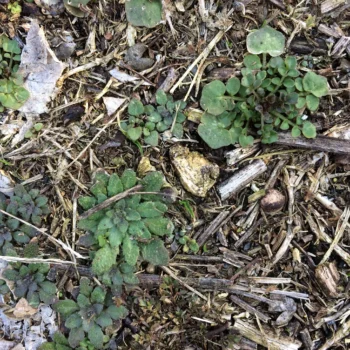
Mouseear Cress: The Tiny Plant That’s Actually a Scientific Superstar
If you’ve ever spotted a small, seemingly unremarkable plant with tiny white flowers growing in your garden beds or along pathways, you might have encountered mouseear cress (Arabidopsis thaliana). While this diminutive annual might not win any beauty contests, it holds the distinguished title of being one of the most studied plants in scientific research. But should you welcome it into your garden? Let’s dig into what makes this little plant tick.
What Is Mouseear Cress?
Mouseear cress, scientifically known as Arabidopsis thaliana, is a small annual plant that belongs to the mustard family. You might also see it referred to by its synonyms Arabis thaliana or Sisymbrium thalianum in older gardening references. This unassuming plant typically forms a small rosette of leaves close to the ground before sending up delicate stems topped with clusters of tiny white flowers.
Where Does It Come From and Where Can You Find It?
Originally hailing from Europe, Asia, and North Africa, mouseear cress is a non-native species that has made itself at home across much of North America. It’s been introduced and now reproduces spontaneously in the wild throughout Canada, the lower 48 states, and even St. Pierre and Miquelon.
You can find this adaptable little plant growing in an impressive range of locations, including Alabama, Arkansas, California, Connecticut, Delaware, Florida, Georgia, Idaho, Illinois, Indiana, Iowa, Kansas, Kentucky, Louisiana, Maine, Maryland, Massachusetts, Michigan, Minnesota, Mississippi, Missouri, Montana, Nebraska, New Hampshire, New Jersey, New York, North Carolina, Ohio, Oklahoma, Oregon, Pennsylvania, Rhode Island, South Carolina, South Dakota, Tennessee, Texas, Utah, Vermont, Virginia, Washington, West Virginia, Wisconsin, plus the Canadian provinces of British Columbia, Ontario, and Quebec.
- Species observed
- No observations
Should You Grow Mouseear Cress in Your Garden?
Here’s where things get interesting. Mouseear cress isn’t exactly what you’d call a showstopper in the aesthetic department. Standing only a few inches tall with flowers so small you might need to squint to appreciate them, it’s more likely to appear in your garden as a volunteer than as an intentional planting.
The Pros and Cons
Why you might tolerate it:
- It’s harmless and not considered invasive or noxious
- Completes its lifecycle quickly as a cool-season annual
- May provide minor benefits to small pollinators
- Self-seeds readily, requiring no maintenance
- Fascinating for plant science enthusiasts
Why you might not want it:
- Minimal ornamental value
- Can appear weedy in formal garden settings
- Takes up space that could be used for more attractive plants
- Not native to North America
Growing Conditions and Care
If mouseear cress does show up in your garden (and it probably will at some point), it’s quite easy to accommodate. This hardy little annual thrives in USDA zones 3-9 and prefers:
- Full sun to partial shade
- Well-draining, disturbed soils
- Cool weather conditions
- Minimal water requirements
The plant typically germinates in fall or early spring, forms its characteristic rosette, then quickly bolts and flowers when temperatures warm up. It completes its entire lifecycle in just a few months, setting seed before hot summer weather arrives.
Better Native Alternatives
While mouseear cress isn’t problematic, native plant enthusiasts might prefer to encourage indigenous alternatives that provide similar ecological functions but support local wildlife more effectively. Consider these native options:
- Small wildflowers like spring beauty (Claytonia species)
- Native cresses like watercress (Nasturtium officinale)
- Early-blooming native annuals specific to your region
The Bottom Line
Mouseear cress is essentially a harmless garden visitor that you can choose to welcome or politely remove. While it won’t add much visual drama to your landscape, it won’t cause any real problems either. If you’re creating a low-maintenance, naturalistic garden where every plant doesn’t need to earn its keep through stunning beauty, mouseear cress can certainly find a place. However, if you’re aiming for a more curated look or want to focus on supporting native ecosystems, you’ll probably want to weed it out in favor of more purposeful plantings.
Remember, the best garden is one that reflects your personal values and aesthetic preferences – whether that includes tiny scientific celebrities like mouseear cress is entirely up to you!