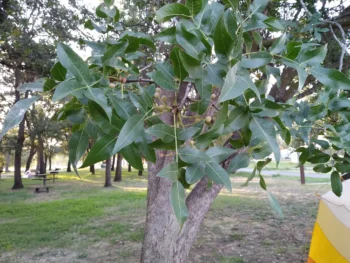
Mt. Atlas Mastic Tree: A Mediterranean Giant for Drought-Tolerant Gardens
If you’re dreaming of creating a Mediterranean oasis in your backyard, the Mt. Atlas mastic tree (Pistacia atlantica) might just catch your eye. This impressive tree brings Old World charm and serious drought tolerance to landscapes, though it comes with some important considerations for American gardeners.
What is the Mt. Atlas Mastic Tree?
The Mt. Atlas mastic tree is a perennial woody giant that can tower over 13-16 feet tall – and often much taller at maturity. As its name suggests, this tree hails from the Atlas Mountains of North Africa and the broader Mediterranean region, making it a non-native species that has found its way into American landscapes, particularly in California and Utah.
You might also see this tree listed under its synonym Pistacia cabulica, but Pistacia atlantica is the accepted botanical name. Despite being non-native, it has established itself in some areas and reproduces naturally without human intervention.
- Species observed
- No observations
Why Consider (or Not Consider) This Tree?
The Mt. Atlas mastic tree offers some compelling benefits for the right garden situation:
- Exceptional drought tolerance once established
- Stunning fall color with golden-yellow to reddish foliage
- Interesting gnarled bark that adds winter interest
- Large, spreading canopy perfect for shade
- Spring flowers that attract bees and other pollinators
However, there are some important drawbacks to consider. As a non-native species, it doesn’t provide the same ecological benefits as native trees. Its large mature size also means it needs plenty of space – definitely not a tree for small urban lots!
Growing Conditions and Care
If you’re in USDA hardiness zones 8-10 and have the space, here’s what this Mediterranean native needs to thrive:
Ideal Growing Conditions
- Full sun exposure
- Well-draining soil (it hates wet feet!)
- Poor to moderately fertile soil is actually preferred
- Space for a large, spreading canopy
Planting and Care Tips
- Plant in fall or spring for best establishment
- Water deeply but infrequently once established
- Minimal pruning required – just remove dead or crossing branches
- Be patient – this tree has a slow to moderate growth rate
- No special fertilization needed in most soils
Garden Design Role
The Mt. Atlas mastic tree works beautifully as a specimen shade tree in Mediterranean-style gardens or xeriscape designs. Its drought tolerance makes it perfect for water-wise landscaping, and its substantial size means it can anchor large garden spaces or provide cooling shade for outdoor living areas.
Consider Native Alternatives
While the Mt. Atlas mastic tree can be a striking addition to the right landscape, consider exploring native alternatives that provide similar benefits while supporting local ecosystems. Depending on your region, native oaks, maples, or other drought-tolerant trees might offer comparable aesthetic appeal with greater ecological value.
The Bottom Line
The Mt. Atlas mastic tree can be a beautiful, low-maintenance addition to large, Mediterranean-style landscapes in suitable climates. Just make sure you have the space for its impressive mature size and remember that native species often provide greater benefits to local wildlife and pollinators. Whatever you choose, proper site selection and care will help ensure your tree thrives for generations to come!