Musk Okra: A Tropical Beauty for Warm Climate Gardens
If you’re looking to add some tropical flair to your warm climate garden, musk okra (Abelmoschus moschatus) might just be the showstopper you need. This eye-catching shrub produces stunning hibiscus-like flowers that can transform any landscape into a tropical paradise. But before you rush to the nursery, let’s dive into what makes this plant special and whether it’s the right fit for your garden.
What is Musk Okra?
Musk okra is a perennial shrub that typically grows as a multi-stemmed woody plant, usually staying under 13-16 feet in height. You might also see it listed under its former scientific name, Hibiscus abelmoschus. Don’t let the okra in its common name fool you – while it’s related to edible okra, this beauty is grown purely for ornamental purposes.
Where Does Musk Okra Come From?
Originally native to India and Southeast Asia, musk okra has found its way to various tropical and subtropical regions around the world. In the United States, you’ll find it growing in Hawaii, Guam, Palau, and Puerto Rico, where it has naturalized and reproduces on its own in the wild.
- Species observed
- No observations
The Visual Appeal
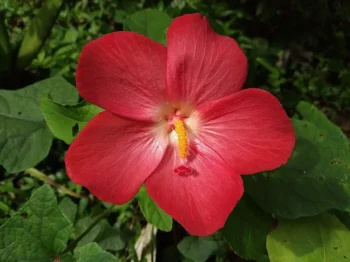
What really sets musk okra apart are its gorgeous flowers. Picture large, bright yellow blooms with deep maroon or dark centers – they’re absolutely stunning and can reach several inches across. The heart-shaped leaves provide a lovely backdrop for these showy flowers, creating an overall tropical aesthetic that’s hard to beat.
Garden Role and Design Uses
Musk okra works wonderfully as:
- A specimen plant that serves as a focal point
- Part of a tropical or subtropical garden theme
- A backdrop plant in mixed borders
- An accent piece in warm climate landscapes
Perfect Garden Types
This plant thrives in tropical and subtropical gardens where temperatures stay consistently warm. It’s particularly well-suited for:
- Hawaiian and Pacific island landscapes
- South Florida and similar warm coastal areas
- Greenhouse cultivation in cooler climates
- Container gardens that can be moved indoors
Growing Conditions and Care
Musk okra is surprisingly easy to grow if you can provide the right conditions:
Climate Requirements: Hardy in USDA zones 9-11, this plant needs consistently warm temperatures and is quite sensitive to frost.
Light and Soil: Provide full sun to partial shade and well-draining soil. The plant adapts to various soil types but performs best with good drainage.
Water Needs: Moderate watering works well – the plant can handle some drought but appreciates consistent moisture during the growing season.
Wetland Considerations
Interestingly, musk okra’s relationship with water varies by location. In the Caribbean region, it’s considered an upland plant that rarely occurs in wetlands. However, in Hawaii, it’s more flexible and can grow in both wetland and non-wetland areas.
Pollinator Benefits
Those beautiful yellow flowers aren’t just for show – they’re excellent at attracting pollinators. Bees, butterflies, and other beneficial insects love visiting musk okra blooms, making it a valuable addition to pollinator-friendly gardens.
Should You Plant Musk Okra?
If you live in a warm climate (zones 9-11) and want a low-maintenance, showy flowering shrub, musk okra could be a great choice. It’s not considered invasive, though it can self-seed and naturalize in suitable conditions.
However, if you’re passionate about native plant gardening, you might want to consider native alternatives that provide similar benefits. Some options include native hibiscus species or other flowering shrubs native to your specific region that can offer the same tropical appeal while supporting local ecosystems.
The Bottom Line
Musk okra is a beautiful, relatively easy-to-grow shrub that can add serious tropical style to warm climate gardens. While it’s not native to the US, it’s not problematic either, making it a reasonable choice for gardeners who want something a bit exotic. Just remember to provide warm conditions, good drainage, and enjoy those stunning yellow blooms that are sure to be conversation starters in your garden!