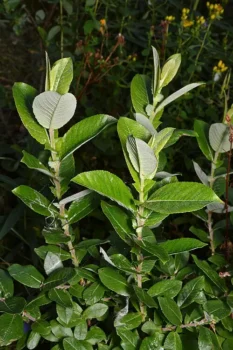
Myrsine-Leaved Willow: A Northern Wetland Shrub for Your Garden
Looking for a hardy shrub that thrives in those soggy spots where other plants fear to tread? Meet the myrsine-leaved willow (Salix myrsinifolia), a compact willow species that might just be the answer to your wetland gardening prayers – though there are some important considerations to keep in mind before you dig in.
What Exactly Is Myrsine-Leaved Willow?
The myrsine-leaved willow is a perennial shrub that typically stays well-behaved in the garden, usually growing to about 13-16 feet tall at most. Unlike its towering tree cousins, this multi-stemmed woody plant keeps things relatively compact, making it a more manageable option for smaller landscapes.
This deciduous shrub produces the characteristic willow catkins that appear in early spring, followed by narrow, elongated leaves that give the plant its distinctive appearance. It’s a member of the extensive willow family, known for their love of moisture and their early-season blooms.
Where Does It Come From?
Here’s where things get interesting – and a bit complicated. The myrsine-leaved willow isn’t actually native to North America. It hails from the chilly regions of northern Europe, particularly Scandinavia and northern Russia. In North America, it’s been introduced and has naturalized in Ontario, Canada, where it reproduces on its own without human help.
- Species observed
- No observations
The Wetland Connection
If you’re dealing with consistently wet soil that makes other gardeners throw up their hands in despair, this might be your new best friend. The myrsine-leaved willow is classified as an obligate wetland species, which is a fancy way of saying it almost always needs wet feet to be happy. We’re talking about those areas that stay moist to wet year-round – the spots where you might find cattails or other water-loving plants thriving.
Garden Appeal and Landscape Role
So why might you want to grow this northern import? Here are a few compelling reasons:
- Erosion control: Its root system helps stabilize wet, potentially erosive soils
- Early pollinator support: Those spring catkins provide crucial early-season pollen and nectar when few other plants are blooming
- Naturalized look: Perfect for creating wild, bog-like garden areas or naturalized landscapes
- Cold hardy: Thrives in USDA zones 2-6, making it suitable for northern climates
Growing Conditions and Care
If you decide to give myrsine-leaved willow a try, here’s what it needs to thrive:
Moisture: This is non-negotiable. It needs consistently moist to wet soil – think bog garden conditions rather than regular garden beds.
Light: Full sun to partial shade works well, though it tends to be happiest with plenty of sunlight.
Soil: Not particularly fussy about soil type as long as it stays wet. It can handle everything from clay to organic-rich mucky soils.
Maintenance: Once established, it’s relatively low-maintenance. You might want to prune it occasionally to maintain shape, but it’s generally content to do its own thing.
A Word of Caution (And Some Alternatives)
While myrsine-leaved willow isn’t currently listed as invasive, it’s worth remembering that it’s not native to our ecosystems. If you’re passionate about supporting local wildlife and maintaining ecological integrity, you might want to consider some native alternatives instead:
- Native willows: Look for species like pussy willow (Salix discolor) or black willow (Salix nigra)
- Dogwood species: Red-osier dogwood thrives in wet conditions and provides excellent wildlife value
- Native viburnums: Several species tolerate wet soils and offer spectacular fall color
The Bottom Line
The myrsine-leaved willow can be a useful plant for challenging wet sites, especially in northern gardens where its cold hardiness shines. Its early catkins provide valuable pollinator resources, and its manageable size makes it suitable for smaller landscapes. However, given its non-native status, consider exploring native alternatives first – they’ll provide the same benefits while supporting local ecosystems.
If you do choose to plant it, make sure you can provide the consistently wet conditions it craves, and enjoy watching the early spring catkins attract hungry pollinators when little else is blooming in your garden.