Myrtle Spurge: A Mediterranean Beauty for Your Drought-Tolerant Garden
Looking for a plant that laughs in the face of drought while adding architectural flair to your landscape? Meet myrtle spurge (Euphorbia myrsinites), a striking succulent that’s been winning over gardeners with its unique spiral leaves and cheerful spring blooms. But before you fall head over heels for this Mediterranean charmer, let’s dig into what makes it tick—and whether it’s the right fit for your garden.
What Is Myrtle Spurge?
Myrtle spurge is a low-growing, herbaceous perennial that brings a distinctly architectural look to any garden. This non-native species hails from the Mediterranean region and has made itself at home in various parts of North America. You might also see it listed under its scientific name, Euphorbia myrsinites, or its botanical synonym, Tithymalus myrsinites.
As a member of the spurge family, this plant has some unique characteristics that set it apart from your typical garden perennials. It’s technically classified as a forb—a fancy way of saying it’s a non-woody herbaceous plant that can live for multiple years.
Where You’ll Find It Growing
Myrtle spurge has established populations across several western and some eastern states, including California, Colorado, Idaho, New Mexico, Oregon, Utah, Washington, and Wisconsin. It’s also found in Ontario, Canada. Since it’s not native to North America, it’s considered an introduced species that can reproduce and persist without human intervention.
- Species observed
- No observations
The Visual Appeal
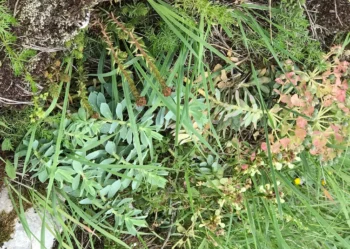
What makes myrtle spurge such an eye-catcher? Picture this: thick, fleshy blue-green leaves arranged in perfect spirals around trailing stems, creating a living architectural element that looks almost too geometric to be natural. In spring, the plant produces clusters of bright yellow-green bracts (not true flowers, but just as showy) that create a stunning contrast against the blue-gray foliage.
The plant typically grows 6-12 inches tall and can spread 12-18 inches wide, making it an excellent choice for ground cover in the right conditions.
Garden Design Possibilities
Myrtle spurge shines in several garden settings:
- Rock gardens: Its drought tolerance and architectural form make it perfect for tucking between stones
- Mediterranean-style landscapes: Pairs beautifully with lavender, rosemary, and other Mediterranean plants
- Modern/contemporary gardens: The geometric leaf arrangement adds sculptural interest
- Xeriscaping projects: Thrives in low-water landscapes once established
- Slopes and banks: Helps with erosion control while looking attractive
Growing Conditions and Care
Here’s where myrtle spurge really shines—it’s refreshingly low-maintenance! This tough little plant thrives in USDA hardiness zones 5-9 and has some pretty simple requirements:
- Sunlight: Full sun is best, though it can tolerate some partial shade
- Soil: Well-draining soil is absolutely crucial—this plant will rot in soggy conditions
- Water: Drought-tolerant once established; actually prefers to stay on the dry side
- Fertilizer: Generally unnecessary in most soils
Planting and Maintenance Tips
Getting started with myrtle spurge is straightforward:
- Plant in spring after the last frost
- Ensure excellent drainage—consider raised beds or slopes if your soil is heavy
- Space plants 12-18 inches apart
- Water regularly the first year, then reduce watering significantly
- Deadhead spent flowers if you don’t want the plant to self-seed
- Wear gloves when handling—the milky sap can be irritating to skin
Pollinator and Wildlife Benefits
Myrtle spurge offers some benefits to garden wildlife, particularly as an early-season nectar source. The bright bracts appear in spring when many native plants haven’t started blooming yet, providing food for bees and other beneficial insects during a potentially lean time.
Important Considerations
Before you rush out to plant myrtle spurge, there are a few things to keep in mind. As a non-native species, it can self-seed readily and may spread beyond where you originally planted it. While it’s not currently listed as invasive in most areas, responsible gardening practices suggest being mindful of its potential to naturalize.
Safety note: Like all euphorbias, myrtle spurge produces a milky sap that can be irritating to skin and eyes, and is toxic if ingested. Always wear gloves when handling, and keep it away from areas where children and pets play.
Native Alternatives to Consider
If you love the look of myrtle spurge but prefer to stick with native plants, consider these alternatives that offer similar drought tolerance and architectural interest:
- Sedum species: Various native stonecrops provide succulent appeal
- Penstemon species: Native beardtongues offer drought tolerance and pollinator benefits
- Native bunch grasses: Provide architectural form and are excellent for wildlife
- Regional native groundcovers: Check with your local native plant society for specific recommendations
The Bottom Line
Myrtle spurge can be a stunning addition to drought-tolerant gardens, offering unique visual appeal and easy care. However, as with any non-native plant, it’s worth considering the bigger picture of your local ecosystem. If you do choose to grow it, be mindful of its self-seeding tendencies and consider deadheading spent flowers to prevent unwanted spread.
Whether you go with myrtle spurge or choose a native alternative, the key is creating a garden that brings you joy while being a good neighbor to the local environment. Happy gardening!