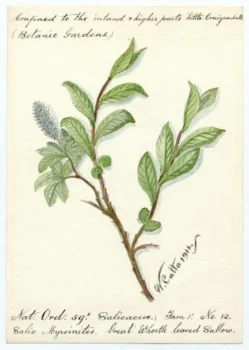
Myrtle Willow: A Charming Alpine Shrub for Cool Climate Gardens
If you’ve ever dreamed of bringing a touch of European alpine charm to your garden, myrtle willow might just be the plant you’re looking for. This petite shrub, with its glossy leaves and compact growth habit, offers something a little different from your typical garden willow.
What is Myrtle Willow?
Myrtle willow (Salix myrsinites) is a low-growing shrub that’s quite the overachiever in the looks department. Unlike its towering willow cousins that grace riverbanks, this little charmer stays close to the ground, rarely exceeding 3 feet in height. Its claim to fame? Those gorgeous, glossy dark green leaves that are rounded and oval-shaped, reminiscent of myrtle leaves – hence the name!
Where Does It Come From?
This alpine beauty hails from the mountainous regions of Europe, including the majestic Alps and Pyrenees. It’s perfectly adapted to life in rocky, high-altitude environments where summers are cool and winters are seriously cold.
Why You Might Want to Grow Myrtle Willow
Here are some compelling reasons to consider this European native:
- Unique texture: Those glossy, rounded leaves create an interesting contrast to typical garden foliage
- Pollinator friendly: Early spring catkins provide much-needed nectar for bees and other pollinators when little else is blooming
- Cold hardy: Thrives in USDA zones 3-7, perfect for gardeners dealing with harsh winters
- Low maintenance: Once established, it’s relatively fuss-free
- Erosion control: Great for stabilizing slopes and rocky areas
Perfect Garden Situations
Myrtle willow shines in specific garden settings:
- Rock gardens: Its natural alpine habitat makes it a perfect fit
- Alpine gardens: Pairs beautifully with other mountain plants
- Ground cover: Excellent for covering challenging slopes or rocky areas
- Naturalistic landscapes: Works well in wild or informal garden designs
Growing Conditions and Care
Success with myrtle willow comes down to mimicking its mountain home:
- Light: Full sun to partial shade
- Soil: Well-draining soil that stays consistently moist
- Climate: Prefers cool summers and cold winters
- Watering: Keep soil moist but not waterlogged
- Pruning: Minimal pruning needed – just remove dead or damaged branches
Planting Tips
Plant myrtle willow in spring after the last frost. Choose a spot with good drainage – while it likes moisture, it doesn’t appreciate soggy feet. Space plants about 2-3 feet apart if using as ground cover.
A Word About Native Alternatives
While myrtle willow isn’t invasive, consider exploring native willow species for your region first. Native plants support local ecosystems more effectively and are often better adapted to local conditions. Some excellent native willow alternatives might include pussy willow (Salix discolor) or sandbar willow (Salix interior), depending on your location.
The Bottom Line
Myrtle willow is a delightful choice for gardeners in cool climates who want something a little different. Its compact size, attractive foliage, and early pollinator support make it a valuable addition to rock gardens and alpine-style landscapes. Just remember to consider native alternatives first, and if you do choose myrtle willow, you’ll be rewarded with a charming, low-maintenance shrub that brings a touch of European mountain magic to your garden.