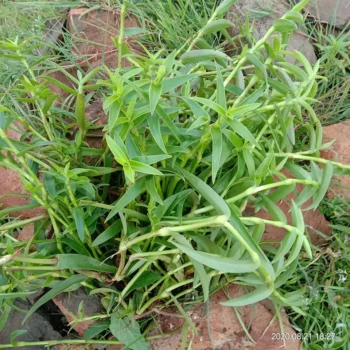
Nakedstem Dewflower: A Delicate Ground Cover for Moist Gardens
If you’re looking for a low-maintenance ground cover that thrives in those tricky wet spots in your garden, you might want to consider the nakedstem dewflower (Murdannia nudiflora). This small but charming plant has quietly made itself at home across much of the southeastern United States, offering gardeners an interesting option for challenging growing conditions.
Getting to Know Nakedstem Dewflower
Nakedstem dewflower is exactly what it sounds like – a delicate flowering plant with slender, relatively bare stems that seem to emerge directly from the ground. As a member of the dayflower family, it shares some characteristics with its more famous cousin, the common dayflower, but maintains its own unique charm.
This plant can behave as either an annual or perennial depending on your climate, and it’s classified as a forb – essentially a soft-stemmed flowering plant without woody tissue. Don’t let its delicate appearance fool you, though. Once established in the right conditions, it can spread readily to form attractive colonies.
Where You’ll Find It Growing
Originally native to tropical regions of Asia and Africa, nakedstem dewflower has established populations across the southeastern United States. You can currently find it growing in Alabama, Arkansas, Florida, Georgia, Hawaii, Louisiana, Mississippi, North Carolina, South Carolina, and Texas, as well as in Puerto Rico, Guam, and Palau.
- Species observed
- No observations
While it’s considered a non-native species in these areas, it has successfully naturalized and reproduces on its own without human intervention.
What Makes It Special in the Garden
The real appeal of nakedstem dewflower lies in its adaptability to wet conditions. This plant absolutely loves moisture and can handle everything from consistently damp soil to periodic flooding. Its small, delicate blue to purple flowers add a subtle splash of color, while its low-growing, spreading habit makes it useful as a living carpet in challenging areas.
Here’s what makes it garden-worthy:
- Thrives in wet, boggy conditions where other plants struggle
- Low-maintenance once established
- Attractive small flowers that appeal to pollinators
- Forms dense mats that can help prevent soil erosion
- Tolerates a range of light conditions from partial shade to full sun
Growing Conditions and Care
If you’re thinking about adding nakedstem dewflower to your garden, you’ll have the best success in USDA hardiness zones 8-11. The key to happy plants is moisture – lots of it. This species performs best in:
- Consistently moist to wet soils
- Areas with poor drainage where other plants might rot
- Pond margins, rain gardens, or low-lying areas
- Partial shade to full sun locations
The plant’s wetland status varies by region, but it’s generally classified as either facultative (equally happy in wet or dry conditions) or facultative wetland (prefers wet but tolerates drier spots). This flexibility makes it particularly valuable for transitional areas in your landscape.
A Word of Caution and Alternatives
While nakedstem dewflower isn’t currently listed as invasive or noxious, it’s worth remembering that it is a non-native species. If you’re passionate about supporting local ecosystems, you might want to consider native alternatives that provide similar benefits.
Some excellent native options for wet areas include:
- Blue flag iris (Iris virginica) for dramatic height and color
- Swamp milkweed (Asclepias incarnata) for pollinator support
- Cardinal flower (Lobelia cardinalis) for stunning red blooms
- Native sedges for textural ground cover
The Bottom Line
Nakedstem dewflower can be a practical solution for those persistently wet areas where you’ve struggled to establish other plants. Its low-maintenance nature and ability to form attractive colonies make it worth considering, especially if you’re dealing with challenging moisture conditions. Just remember to weigh the benefits against your personal commitment to native plant gardening, and always check local regulations before introducing any new species to your landscape.
Whether you choose this adaptable ground cover or opt for native alternatives, the key is selecting plants that will thrive in your specific conditions while supporting the broader garden ecosystem you’re trying to create.