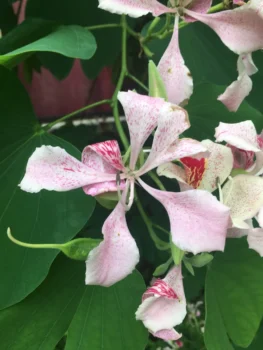
Napoleon’s Plume: A Tropical Beauty for Warm Climate Gardens
With its distinctive butterfly-shaped leaves and striking pink flowers, Napoleon’s plume (Bauhinia monandra) brings a touch of tropical elegance to warm climate landscapes. This eye-catching shrub has earned its place in many southern gardens, though there are some important considerations for potential growers to keep in mind.
What is Napoleon’s Plume?
Napoleon’s plume is a perennial, multi-stemmed woody shrub that typically reaches 13 to 16 feet in height, though it can sometimes grow taller or remain single-stemmed depending on growing conditions. The plant is also known by the scientific name Bauhinia monandra, and you might occasionally see it listed under its synonym Caspareopsis monandra.
What makes this plant truly distinctive are its unique leaves, which are split down the middle to create a butterfly or heart shape. The showy flowers feature prominent red stamens that create a dramatic display against the pink to red petals.
Native Status and Where It Grows
It’s important to note that Napoleon’s plume is not native to the United States. Originally from South America, Madagascar, and tropical Africa, this species has been introduced and now reproduces spontaneously in the wild across several U.S. regions, including Hawaii, the lower 48 states, Pacific Basin territories, Puerto Rico, and the U.S. Virgin Islands.
Currently, you can find established populations in Florida, Hawaii, Texas, Guam, Palau, Puerto Rico, and the Virgin Islands. While it has naturalized in these areas, it’s not currently listed as invasive or noxious.
- Species observed
- No observations
Garden Appeal and Landscape Role
Napoleon’s plume serves as an excellent specimen plant in tropical and subtropical landscapes. Its unique foliage provides year-round interest, while the vibrant flowers create seasonal drama. The plant works well as:
- A focal point in tropical garden designs
- Background planting in mixed borders
- Screening plant for privacy
- Accent plant near patios or walkways
The butterfly-shaped leaves and colorful blooms make it particularly suitable for gardens with a tropical or exotic theme.
Wildlife and Pollinator Benefits
One of the plant’s notable advantages is its appeal to pollinators. The nectar-rich flowers attract butterflies, bees, and hummingbirds, making it a valuable addition for gardeners interested in supporting local wildlife populations.
Growing Conditions and Care
Napoleon’s plume thrives in USDA hardiness zones 9-11, making it suitable only for the warmest regions of the United States. The plant is quite heat tolerant once established but sensitive to frost.
Preferred growing conditions include:
- Full sun to partial shade exposure
- Well-draining soil
- Regular watering, especially during dry periods
- Protection from freezing temperatures
Planting and Care Tips
For successful cultivation:
- Plant in spring after the last frost date
- Choose a location with good air circulation
- Water regularly but avoid waterlogged conditions
- Prune lightly after flowering to maintain shape
- Mulch around the base to retain moisture and regulate soil temperature
- In borderline zones, consider container growing so you can move the plant indoors during cold snaps
Should You Plant Napoleon’s Plume?
While Napoleon’s plume can be an attractive addition to appropriate climates, gardeners should consider their local ecosystem when making planting decisions. Since this is a non-native species that has naturalized in some areas, you might want to explore native alternatives that provide similar aesthetic appeal while supporting local wildlife.
For those in suitable zones who choose to grow Napoleon’s plume, responsible gardening practices—such as preventing seed spread beyond your property—can help minimize potential ecological impacts.
If you’re drawn to the unique foliage and tropical appearance of this plant, consider researching native species in your area that might offer similar garden benefits while supporting your local ecosystem.