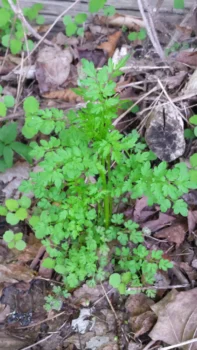
Narrowleaf Bittercress: An Invasive Species to Avoid in Your Garden
If you’ve noticed small white flowers popping up in shaded, moist areas of your garden early in the spring, you might be looking at narrowleaf bittercress (Cardamine impatiens). While this little plant might seem harmless at first glance, it’s actually an invasive species that can cause big problems for native ecosystems and your carefully planned garden.
What is Narrowleaf Bittercress?
Narrowleaf bittercress is an annual to biennial forb (that’s garden-speak for a non-woody flowering plant) that originally hails from Europe and Asia. This non-native species has made itself quite at home across much of North America, spreading far beyond where it was first introduced.
As a member of the mustard family, this plant shares some characteristics with other bittercress species, but don’t let its delicate appearance fool you – it’s a determined spreader that can quickly take over areas where native plants should be thriving.
Where You’ll Find It
Narrowleaf bittercress has established populations across a wide swath of North America, including New Brunswick and Ontario in Canada, and numerous U.S. states from Maine down to North Carolina and as far west as Michigan, Indiana, and Kentucky.
- Species observed
- No observations
Why You Should Avoid Planting This Species
Here’s the thing about narrowleaf bittercress – it’s not just non-native, it’s actively invasive. Several states have recognized the threat this plant poses:
- Connecticut classifies it as Invasive, Prohibited
- New York lists it as Prohibited
- Wisconsin also considers it Prohibited
When a plant gets these kinds of legal designations, it means it’s been proven to cause ecological or economic harm. Narrowleaf bittercress can outcompete native wildflowers and ground covers, disrupting local ecosystems that wildlife depends on.
What It Looks Like
Narrowleaf bittercress produces clusters of small, white, four-petaled flowers that appear in early spring. The plant has a somewhat delicate appearance and can tolerate both wetland and upland conditions (it has a facultative wetland status across multiple regions). This adaptability is part of what makes it so successful – and so problematic.
The plant typically grows in moist, shaded areas but can adapt to various conditions, making it suitable for USDA hardiness zones 3-8.
Better Native Alternatives
Instead of allowing narrowleaf bittercress to take over, consider these native alternatives that provide similar early spring interest without the ecological downsides:
- Wild ginger (Asarum canadense) for shaded ground cover
- Spring beauty (Claytonia virginica) for delicate spring flowers
- Toothwort species (Cardamine concatenata) for early white flowers in the mustard family
- Wild columbine (Aquilegia canadensis) for unique spring blooms
If You Find It in Your Garden
If you discover narrowleaf bittercress has already moved into your space, the best approach is removal. Since it’s an annual to biennial plant, preventing it from setting seed is crucial. Hand-pull plants before they flower, and be persistent – it may take several seasons to fully eliminate an established population.
Always dispose of pulled plants in municipal yard waste rather than composting them, to prevent accidental spread.
The Bottom Line
While narrowleaf bittercress might provide some early nectar for small pollinators, the ecological costs far outweigh any benefits. Native plants will provide better, more specialized resources for local wildlife while supporting the complex web of relationships that make healthy ecosystems function.
When it comes to narrowleaf bittercress, the best gardening advice is simple: don’t plant it, and remove it if you find it. Your local native plants – and the wildlife that depends on them – will thank you for it.