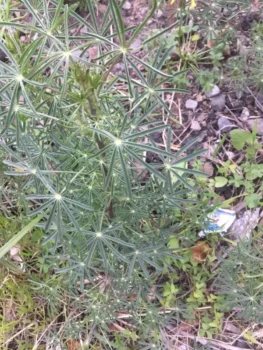
Narrowleaf Lupine: A Mediterranean Beauty for Your Garden
If you’re looking to add a splash of brilliant blue to your garden while also enriching your soil, narrowleaf lupine (Lupinus angustifolius) might just be the annual flower you’ve been searching for. This charming Mediterranean native, also known as blue lupine or altramuz azul, brings both beauty and benefits to garden spaces across North America.
What is Narrowleaf Lupine?
Narrowleaf lupine is an annual forb that belongs to the legume family. Unlike its woody cousins, this herbaceous plant completes its entire life cycle in one growing season, making it perfect for gardeners who love to experiment with different looks each year. The plant typically reaches about 4 feet in height and displays the classic lupine flower spikes that gardeners adore.
You might also encounter this plant under its botanical synonyms Lupinus linifolius or Lupinus varius, but they’re all referring to the same delightful species.
Where Does It Grow?
While narrowleaf lupine isn’t native to North America, it has established itself in several states including Florida, Georgia, Maine, and British Columbia. The plant reproduces on its own in the wild but isn’t considered a persistent problem. In its native Mediterranean region, it thrives in the mild, wet winters and dry summers.
- Species observed
- No observations
Garden Appeal and Design Role
This lupine brings several attractive features to the garden:
- Striking blue flower spikes that bloom in late summer
- Attractive green, palmate foliage with medium texture
- Rapid growth rate that provides quick garden impact
- Erect, single-crown growth form reaching 4 feet tall
- Fall-conspicuous appearance as seeds develop
Narrowleaf lupine works wonderfully in Mediterranean-style gardens, annual borders, and naturalized areas. Its nitrogen-fixing ability makes it an excellent companion plant, actually improving soil fertility for neighboring plants.
Growing Conditions and Care
This relatively easy-going annual has some specific preferences:
- Soil: Prefers coarse to medium-textured, well-draining soils
- pH: Thrives in slightly acidic to neutral conditions (5.6-7.5)
- Sun exposure: Requires full sun; shade intolerant
- Water: Medium moisture needs with low drought tolerance
- Temperature: Needs at least 180 frost-free days and temperatures above 21°F
The plant grows actively during fall, winter, and spring, making it perfect for cool-season gardens in warmer climates.
Planting and Propagation
Growing narrowleaf lupine is straightforward:
- Direct seed in fall or early spring
- Seeds are moderately sized (about 2,500 per pound)
- No cold stratification required
- Seedlings show medium vigor
- Seeds persist well and may self-seed
Unfortunately, narrowleaf lupine isn’t commonly available from commercial sources, so you may need to source seeds from specialty suppliers or seed exchanges.
Wildlife and Pollinator Benefits
The blue flowers attract various pollinators, particularly bees, during the late summer blooming period. As a legume, the plant also contributes to soil health through nitrogen fixation, benefiting the entire garden ecosystem.
Important Considerations
While narrowleaf lupine offers many benefits, there are a few things to keep in mind:
- The plant has moderate toxicity, so keep away from grazing animals
- It’s not fire resistant, so avoid planting in fire-prone areas
- As a non-native species, consider native alternatives for wildlife gardens
Native Alternatives to Consider
If you’re focused on supporting native ecosystems, consider these native lupine species instead:
- Wild lupine (Lupinus perennis) – supports endangered Karner blue butterfly
- Large-leaf lupine (Lupinus polyphyllus) – native to western North America
- Texas bluebonnet (Lupinus texensis) – Texas state flower
The Bottom Line
Narrowleaf lupine can be a lovely addition to the right garden, offering beautiful blue blooms and soil-enriching benefits. While it’s not native to North America, it’s also not invasive or problematic. If you choose to grow it, you’ll enjoy its rapid growth, striking flowers, and the satisfaction of knowing you’re improving your soil naturally. Just remember to consider native alternatives if your primary goal is supporting local wildlife and ecosystems.