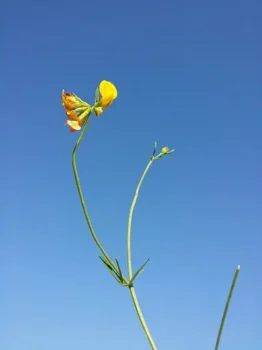
Narrowleaf Trefoil: A Hardy Ground Cover with Yellow Blooms
Looking for a tough, low-maintenance ground cover that can handle poor soils and drought conditions? Narrowleaf trefoil (Lotus tenuis) might catch your eye with its cheerful yellow flowers and ability to thrive where other plants struggle. Also known as narrowleaf bird’s-foot trefoil, this perennial forb has made itself at home across much of North America, though it originally hails from Europe and Asia.
What is Narrowleaf Trefoil?
Narrowleaf trefoil is a low-growing perennial that spreads in a prostrate, carpet-like fashion. This hardy little plant reaches just about one foot in height but can spread to form dense mats. Its fine-textured foliage stays green throughout the growing season, and come mid-spring, it produces small but conspicuous yellow flowers that add a bright splash of color to the landscape.
As a member of the legume family, narrowleaf trefoil has the neat trick of fixing nitrogen in the soil, which means it can actually improve soil fertility where it grows. It’s a true survivor, thriving in USDA hardiness zones 4-8 and tolerating temperatures as low as -21°F.
Where Does It Grow?
This non-native species has established itself across a wide range of North American locations, including British Columbia, Ontario, and numerous U.S. states from coast to coast—from California and Oregon in the west to New York and Rhode Island in the east, and many states in between including Colorado, Kansas, Montana, and Virginia.
- Species observed
- No observations
Garden Appeal and Landscape Uses
Narrowleaf trefoil isn’t going to win any beauty contests, but it has its charms. The small yellow flowers bloom from mid-spring through summer, providing a modest but cheerful display. While the individual flowers aren’t particularly showy, they appear consistently throughout the growing season.
This plant shines in practical applications:
- Ground cover for difficult sites
- Erosion control on slopes
- Low-maintenance areas where grass struggles
- Naturalized meadow plantings
- Areas with poor, compacted soils
Growing Conditions and Care
One of narrowleaf trefoil’s best qualities is its adaptability. This tough plant handles a wide range of growing conditions:
Soil: Adapts to coarse, medium, and fine-textured soils with pH ranging from 4.5 to 7.9. It has medium tolerance for salinity and low tolerance for high calcium carbonate levels.
Water: Highly drought tolerant with low moisture requirements. Annual precipitation needs range from 25 to 50 inches, and it has medium tolerance for waterlogged conditions.
Light: Prefers full sun and is intolerant of shade.
Temperature: Hardy in zones 4-8, requiring at least 160 frost-free days per growing season.
Planting and Establishment
Narrowleaf trefoil is typically grown from seed, which is routinely available commercially. With approximately 485,000 seeds per pound, a little goes a long way. The seeds have medium abundance and medium seedling vigor, so establishment is generally straightforward but not overly aggressive.
Plant seeds in spring for best results. The plant has a moderate growth rate and will gradually establish itself over the growing season. Once established, it requires minimal care and has medium regrowth potential after cutting or disturbance.
Benefits and Considerations
The yellow flowers attract bees and other small pollinators, providing some wildlife value during the blooming period. As a nitrogen-fixing plant, it can improve soil fertility over time, which benefits neighboring plants.
However, it’s important to note that narrowleaf trefoil is not native to North America. While it’s not currently listed as invasive or noxious, gardeners interested in supporting native ecosystems might want to consider native alternatives such as wild bergamot, native clovers, or other indigenous ground covers that provide similar benefits while supporting local wildlife more effectively.
The Bottom Line
Narrowleaf trefoil is a practical choice for challenging sites where you need reliable ground cover. It’s particularly useful for erosion control, low-maintenance landscaping, and areas with poor soils. While it won’t provide the dramatic beauty of showier natives, it delivers consistent performance with minimal fuss. Just remember that choosing native plants when possible helps support local ecosystems and wildlife—so consider this one for truly difficult spots where natives might struggle, and explore indigenous alternatives for more hospitable garden areas.