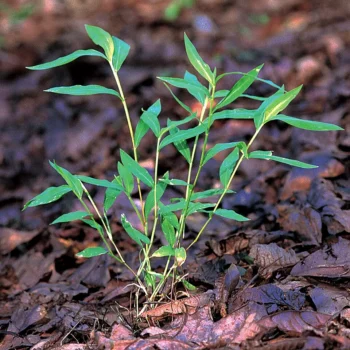
Nepalese Browntop: An Invasive Grass You Don’t Want in Your Garden
If you’ve stumbled across Nepalese browntop (Microstegium vimineum) in your research, we need to have a serious chat. This isn’t your typical should I plant this? scenario – this is more of a how do I get rid of this? situation. Let’s dive into why this seemingly innocent grass has earned itself a spot on invasive species lists across much of the United States.
What Is Nepalese Browntop?
Nepalese browntop is an annual grass that originally hails from Asia, including Japan, Korea, China, and India. Don’t let its delicate, wispy appearance fool you – this grass is a master of taking over natural areas and crowding out native plants that our local wildlife depends on.
You might also see it referred to by its scientific name, Microstegium vimineum, or encounter it under various historical names like Andropogon vimineum or Eulalia viminea in older botanical references.
Where You’ll Find This Invasive Grass
Unfortunately, Nepalese browntop has spread far beyond its native range and now grows wild across much of the eastern United States. You’ll find established populations in Alabama, Arkansas, Connecticut, Delaware, Florida, Georgia, Illinois, Indiana, Kentucky, Louisiana, Maryland, Massachusetts, Mississippi, Missouri, New Jersey, New York, North Carolina, Ohio, Pennsylvania, South Carolina, Tennessee, Texas, Virginia, West Virginia, the District of Columbia, and Puerto Rico.
- Species observed
- No observations
Why This Grass Is Bad News
Here’s where things get serious. Nepalese browntop isn’t just mildly problematic – it’s officially recognized as invasive or prohibited in multiple states:
- Alabama lists it as a Category 1 invasive and Class C noxious weed
- Connecticut, New Jersey, and Wisconsin have it on their prohibited lists
- Delaware and North Carolina classify it as invasive
- Missouri considers it invasive through both their Department of Conservation and Invasive Plant Council
- Michigan keeps it on their watch list
The problem with this grass is its ability to form dense mats that choke out native plants. While it might seem harmless, it provides virtually no benefit to our native wildlife – studies show it contributes only 2-5% of terrestrial birds’ diets and offers sparse cover.
Growing Conditions (That You Should Know to Avoid)
Nepalese browntop is particularly sneaky because it thrives in conditions where many native plants struggle. It’s shade tolerant and can handle both wet and dry conditions (classified as facultative for wetland status across all U.S. regions). This adaptability, combined with its annual growth cycle, allows it to quickly establish in disturbed areas, forest edges, and even shaded woodlands.
It’s hardy in USDA zones 5-10, which explains its wide distribution across the country.
What to Do If You Find It
If you discover Nepalese browntop on your property, here’s what you should know:
- Don’t ignore it: Early intervention is key to preventing spread
- Hand pulling works: Since it’s annual, removing plants before they set seed can be effective
- Timing matters: Pull in late summer to early fall before seed dispersal
- Restore with natives: Replace removed areas with native grasses and groundcovers to prevent reestablishment
Better Alternatives for Your Garden
Instead of this invasive grass, consider these beautiful native alternatives that will actually support your local ecosystem:
- Native sedges (Carex species) for shaded areas
- Wild ginger (Asarum canadense) for groundcover
- Native ferns for textural interest
- Local native grasses appropriate to your region
The Bottom Line
Nepalese browntop is one of those plants that proves not everything green belongs in our gardens. While it might establish easily and seem low-maintenance, its environmental impact makes it a definite no for responsible gardeners. If you encounter it, consider yourself a conservation hero for removing it and replacing it with native plants that will truly benefit your local ecosystem.
Remember, the best gardens are those that work in harmony with nature, not against it. Let’s leave Nepalese browntop in the invasive species to avoid category and focus on native plants that will make both our gardens and local wildlife thrive.