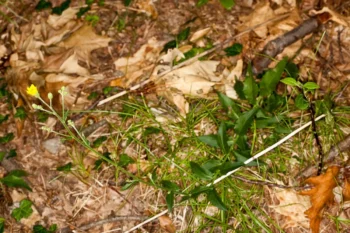
New England Hawkweed: A European Wildflower That’s Made Itself at Home
If you’ve ever wandered through a northeastern meadow and spotted cheerful yellow flowers that look like mini dandelions on steroids, you’ve likely encountered New England hawkweed (Hieracium sabaudum). This perennial wildflower has quite the story – despite its name suggesting New England origins, it’s actually a European native that decided to pack its bags and settle down across North America.
What Exactly Is New England Hawkweed?
New England hawkweed is a hardy perennial forb – that’s garden-speak for a non-woody flowering plant that comes back year after year. Also known by its scientific name Hieracium sabaudum (and sometimes called by its synonym Hieracium vagum), this resilient little character belongs to the sunflower family and shares that family’s knack for producing bright, attention-grabbing blooms.
As a non-native species, New England hawkweed has established itself quite successfully across parts of Canada and the northeastern United States, reproducing on its own without any help from us humans.
Where You’ll Find It Growing
This adaptable plant has made itself comfortable across a surprising range of locations. You’ll find New England hawkweed growing in British Columbia and Nova Scotia in Canada, and throughout Connecticut, Massachusetts, New Jersey, New York, Pennsylvania, Quebec, and Wisconsin in the United States.
- Species observed
- No observations
Should You Plant New England Hawkweed?
Here’s where things get a bit nuanced. While New England hawkweed isn’t necessarily a bad plant, it’s worth considering both the pros and cons before adding it to your garden.
The Case For Growing It:
- Low maintenance and drought tolerant once established
- Attractive yellow flowers that bloom over a long season
- Provides nectar for bees, butterflies, and other pollinators
- Thrives in poor soils where other plants might struggle
- Hardy across USDA zones 3-8
The Case Against:
- As a non-native species, it doesn’t provide the same ecological benefits as native plants
- Can spread aggressively via both seeds and underground runners
- May crowd out native wildflowers in naturalized areas
Native Alternatives to Consider
If you love the look of New England hawkweed but want to support native ecosystems, consider these fantastic native alternatives that offer similar yellow blooms:
- Wild bergamot (Monarda fistulosa)
- Black-eyed Susan (Rudbeckia species)
- Wild columbine (Aquilegia canadensis)
- Native goldenrods (Solidago species)
How to Grow New England Hawkweed Successfully
If you do decide to grow New England hawkweed, the good news is that it’s refreshingly easy-going. This plant seems to have inherited that classic European make-do attitude.
Growing Conditions:
- Light: Full sun to partial shade (though it flowers best in full sun)
- Soil: Well-draining soil; tolerates poor, rocky, or sandy conditions
- Water: Drought tolerant once established; avoid overwatering
- Climate: Hardy in USDA zones 3-8
Planting and Care Tips:
- Plant in spring after the last frost danger has passed
- Space plants about 12-18 inches apart to allow for spreading
- Water regularly during the first growing season to help establish roots
- Once established, minimal care is needed – this plant practically grows itself
- Deadhead spent flowers if you want to prevent self-seeding
- Be prepared to manage its spread if planted in small gardens
Best Garden Settings
New England hawkweed works best in informal garden settings where its spreading nature can be an asset rather than a nuisance. Think meadow gardens, naturalized areas, or that challenging spot where nothing else wants to grow. It’s particularly useful for erosion control on slopes or in areas with poor soil.
The Bottom Line
New England hawkweed is one of those plants that sits in the middle ground – it’s not terrible, but it’s not necessarily the best choice either. If you’re looking for a low-maintenance yellow wildflower and aren’t too concerned about native plant gardening, it might work for you. However, if supporting local ecosystems is important to your gardening philosophy, you’ll probably want to skip this European transplant in favor of native alternatives that provide better wildlife habitat and ecological benefits.
Whatever you decide, remember that gardening is ultimately about creating a space that brings you joy while being mindful of our impact on the broader environment. Sometimes that means making tough choices between what’s pretty and what’s best for local wildlife – but hey, that’s all part of the adventure!