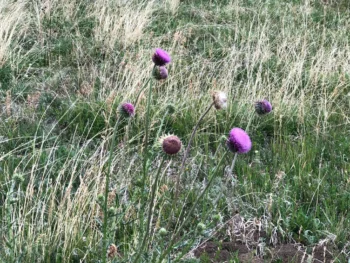
Nodding Plumeless Thistle: An Invasive Species to Avoid in Your Garden
If you’ve spotted a tall, spiny plant with drooping purple flower heads in your neighborhood, you might be looking at nodding plumeless thistle (Carduus nutans). While its nodding blooms might seem charming at first glance, this European import has become a serious problem across North America – and it’s definitely not something you want to welcome into your garden.
What is Nodding Plumeless Thistle?
Nodding plumeless thistle is a non-native biennial or perennial forb that has made itself far too comfortable across most of the United States and Canada. This spiny character can grow quite tall and produces distinctive purple-pink flower heads that hang downward – hence the nodding part of its name.
As a forb, it lacks significant woody tissue and puts its energy into producing those eye-catching (but troublesome) flowers and an extensive root system that helps it outcompete native plants.
Where You’ll Find This Unwelcome Guest
Originally from Europe and Asia, nodding plumeless thistle has spread like wildfire across North America. It now grows in virtually every U.S. state and Canadian province, from Alabama to Wyoming, and from British Columbia to Newfoundland. This aggressive spreader thrives in disturbed soils, roadsides, pastures, and unfortunately, gardens where it’s not wanted.
- Species observed
- No observations
Why You Should Avoid Planting Nodding Plumeless Thistle
Here’s where things get serious – this plant is officially recognized as invasive in multiple states:
- Alabama lists it as Category 2 invasive
- Missouri categorizes it as invasive
- Wisconsin has restricted its cultivation
The plant’s aggressive nature means it can quickly take over native habitats, crowding out the plants that local wildlife depends on. While it does attract some pollinators like bees and butterflies, its negative ecological impact far outweighs any pollinator benefits.
Growing Conditions (For Identification Purposes Only)
Understanding where nodding plumeless thistle thrives can help you identify and remove it from your property. This troublemaker prefers:
- USDA hardiness zones 3-9
- Full sun to partial shade
- Disturbed or poor soils
- Upland areas (it’s classified as obligate or facultative upland across most regions)
What to Do If You Find It
If you discover nodding plumeless thistle on your property, don’t panic – but do take action. The key is to remove it before it sets seed. Hand-pulling works for small populations, but be sure to wear thick gloves to protect yourself from those spines. For larger infestations, you may need to contact local agricultural extension services for guidance on appropriate management strategies.
Better Native Alternatives
Instead of letting this invasive species take over, consider these native alternatives that provide similar visual interest without the ecological damage:
- Wild bergamot (Monarda fistulosa) – purple flowers loved by pollinators
- Purple coneflower (Echinacea purpurea) – stunning purple blooms and great for wildlife
- Blazing star species (Liatris spp.) – tall spikes of purple flowers
- Native asters – late-season purple blooms for fall color
These native options will give you the purple flower power you’re looking for while supporting local ecosystems and wildlife.
The Bottom Line
While nodding plumeless thistle might catch your eye with its distinctive drooping flower heads, it’s one plant that’s better admired from afar – preferably while you’re removing it from your property. By choosing native alternatives instead, you’ll create a beautiful garden that supports local wildlife and helps preserve the natural heritage of your region.
Remember, the best gardens are those that work in harmony with nature, not against it. Leave the nodding plumeless thistle for the history books and embrace the incredible native plants that are perfectly adapted to your local conditions.