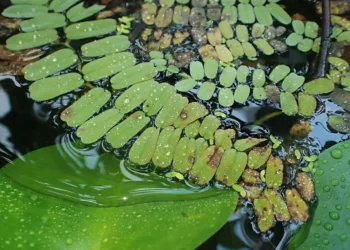
Oblong Salvinia: A Floating Aquatic Fern for Water Gardens
If you’ve ever wondered about those small, floating plants that create neat green carpets on pond surfaces, you might be looking at oblong salvinia (Salvinia oblongifolia). This curious little aquatic fern has been making occasional appearances in California waters, though it’s not a native to North America.
What Exactly Is Oblong Salvinia?
Oblong salvinia is a perennial aquatic fern that belongs to the fascinating world of floating plants. Unlike typical garden plants that root in soil, this little character spends its entire life floating on the water’s surface. It’s classified as a forb, meaning it’s a vascular plant without significant woody tissue – think of it as the aquatic equivalent of your garden herbs, but with a serious love for water.
Originally from South America, particularly Brazil and Argentina, oblong salvinia is considered a waif in botanical terms. This means it’s a non-native plant that occasionally shows up but doesn’t establish permanent populations in the wild. In the United States, it’s been spotted in California, where it maintains its status as an obligate wetland plant – basically, it absolutely must have water to survive.
- Species observed
- No observations
Identifying Oblong Salvinia
Spotting oblong salvinia is relatively straightforward once you know what to look for:
- Small, oval-shaped leaves that float in pairs on the water surface
- Leaves are typically bright green and have a slightly fuzzy texture
- Forms dense, carpet-like mats when growing in groups
- No visible roots extending down into the water (unlike water lilies)
- Leaves are usually less than an inch long
Is Oblong Salvinia Beneficial in Gardens?
For water garden enthusiasts, oblong salvinia can offer some interesting benefits:
The Good: It provides natural water filtration by absorbing excess nutrients, creates shade for fish and other aquatic life, and adds an attractive floating texture to ponds and water features. As an aquatic fern, it doesn’t produce flowers, so don’t expect any pollinator benefits – but it does create habitat for small aquatic creatures.
The Considerations: Since it’s not native to North America, it won’t provide the same ecological benefits as indigenous aquatic plants. Additionally, like many floating plants, it can spread quickly under ideal conditions and may require management to prevent it from taking over your entire water feature.
Growing Conditions and Care
If you’re considering adding oblong salvinia to your water garden, it thrives in warm water temperatures between 68-86°F and prefers still or slow-moving water. It does best in USDA hardiness zones 9-11, though it can be grown as an annual in cooler regions. The plant enjoys bright, indirect light and benefits from nutrient-rich water.
Native Alternatives to Consider
While oblong salvinia isn’t necessarily harmful, native alternatives might serve your water garden better while supporting local ecosystems. Consider these native floating or aquatic plants instead:
- American lotus (Nelumbo lutea)
- Spatterdock (Nuphar advena)
- Water hyacinth (where native)
- Native water lilies specific to your region
The Bottom Line
Oblong salvinia is an interesting aquatic fern that can add unique texture to water gardens, but its non-native status means it’s worth exploring native alternatives first. If you do choose to grow it, keep an eye on its growth to ensure it doesn’t overwhelm your water feature, and never release it into natural waterways. Remember, the best water gardens work with nature, not against it!