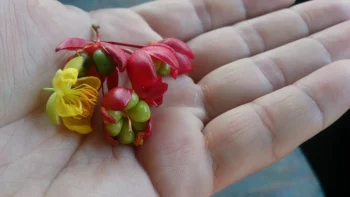
Ochna: The Exotic Shrub with Mickey Mouse Berries
If you’ve ever spotted a shrub with peculiar black berries perched on bright red sepals that look remarkably like Mickey Mouse ears, you’ve likely encountered an Ochna. This eye-catching shrub brings a touch of tropical flair to warm-climate gardens, though it comes with some important considerations for the environmentally conscious gardener.
What Makes Ochna Special?
Ochna is a perennial shrub that typically grows as a multi-stemmed woody plant, usually reaching heights of 13 to 16 feet or less. What really sets this plant apart is its unique ornamental display: bright yellow flowers give way to distinctive black berries sitting atop vibrant red sepals, creating that famous Mickey Mouse appearance that delights both children and adults.
The shrub also features glossy green leaves and attractive branching patterns that add year-round structure to the landscape, even when not in its showy fruiting phase.
Where You’ll Find Ochna Growing
Currently, Ochna has established itself in Florida, Hawaii, and Puerto Rico. However, it’s important to note that this is a non-native species that has been introduced to these areas and now reproduces spontaneously in the wild without human intervention.
- Species observed
- No observations
Should You Plant Ochna in Your Garden?
This is where things get a bit complicated. While Ochna certainly has ornamental appeal, its status as a non-native species that readily naturalizes gives some gardeners pause. The plant has proven quite adaptable, establishing itself in various locations across tropical and subtropical regions of the United States.
If you’re drawn to Ochna’s unique aesthetic, consider these factors:
- It thrives in warm climates (USDA zones 9-11)
- The distinctive berries provide interesting visual appeal
- It attracts pollinators like bees when in flower
- It’s relatively low-maintenance once established
Growing Ochna Successfully
For those in appropriate climates who choose to grow Ochna, here’s what you need to know:
Growing Conditions: Ochna prefers well-drained soil and performs best in full sun to partial shade. As a tropical plant, it needs warm temperatures and protection from frost.
Planting Tips: Plant in spring after the last frost danger has passed. Choose a location with good drainage to prevent root problems.
Care Requirements: Provide regular watering, especially during dry spells. Prune lightly after the flowering period to maintain shape and encourage bushier growth. In cooler zones, consider container growing so you can move the plant indoors during winter.
Native Alternatives Worth Considering
If you love the idea of colorful berries and attractive foliage but prefer supporting native ecosystems, consider these alternatives:
- Native viburnums for berry displays
- Indigenous flowering shrubs specific to your region
- Local species that provide similar ornamental value with ecological benefits
Before planting any non-native species, it’s worth consulting with your local extension office or native plant society to understand the best choices for your specific area and gardening goals.
The Bottom Line
Ochna offers undeniable ornamental appeal with its unique fruiting display and attractive growth habit. While not currently listed as invasive, its non-native status and ability to naturalize warrant thoughtful consideration. Whether you choose to grow Ochna or explore native alternatives, the key is making informed decisions that align with both your aesthetic preferences and environmental values.