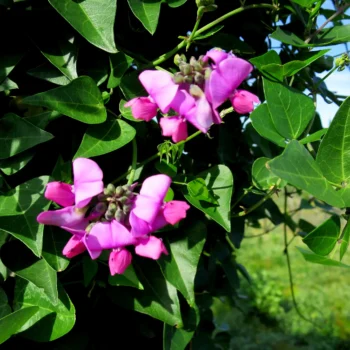
Okie Bean: A South African Climbing Beauty for Your Garden
Meet the okie bean (Dipogon lignosus), a charming climbing perennial that’s been quietly making its mark in California gardens. This South African native brings a touch of exotic flair to landscapes with its heart-shaped leaves and clusters of purple-pink flowers that look like tiny sweet peas. While it’s not a local native, this adaptable climber has found a niche in Mediterranean-style gardens and drought-conscious landscapes.
What Makes Okie Bean Special?
The okie bean is what botanists call a forb herb – essentially a non-woody perennial that dies back to ground level but returns year after year. Don’t let the humble herb classification fool you, though. This vigorous climber can scramble up to 10 feet, creating cascades of color when it blooms.
The flowers are the real showstoppers: delicate, pea-like blooms in shades of purple and pink that appear in small clusters. These nectar-rich flowers are magnets for bees and butterflies, making your garden a buzzing hub of activity during blooming season.
Where Does It Come From?
Originally from the Cape region of South Africa, okie bean has adapted well to similar Mediterranean climates. In the United States, it has established itself primarily in California, where it reproduces on its own and has become part of the naturalized flora.
- Species observed
- No observations
Is Okie Bean Right for Your Garden?
Since okie bean is not native to North America, it won’t provide the same ecological benefits as indigenous plants. However, it’s not currently listed as invasive, making it a reasonable choice for gardeners who appreciate its ornamental qualities. Here’s what to consider:
The Pros:
- Drought tolerant once established
- Fast-growing ground cover or climbing plant
- Attracts pollinators with colorful flowers
- Low maintenance once established
- Good for erosion control on slopes
The Considerations:
- Not native, so limited wildlife value compared to indigenous plants
- Can be vigorous – may need management in small spaces
- Limited to warmer climates (USDA zones 9-11)
Native Alternatives to Consider
If you’re committed to native gardening, consider these alternatives that offer similar benefits:
- California wild rose (Rosa californica) for climbing habit and wildlife value
- Chaparral pea (Pickeringia montana) for similar pea-like flowers
- Blue-eyed grass (Sisyrinchium bellum) for purple blooms and pollinator appeal
Growing Okie Bean Successfully
If you decide to grow okie bean, you’ll find it refreshingly easy to please:
Planting Tips:
- Plant in spring after the last frost
- Choose a spot with full sun to partial shade
- Ensure well-draining soil – it won’t tolerate soggy conditions
- Provide support like a trellis or fence for climbing varieties
Care and Maintenance:
- Water regularly the first year to establish roots
- Once established, it’s quite drought tolerant
- Prune in late winter to control size and shape
- No fertilizer needed – it actually prefers lean soil
- Watch for vigorous growth and trim as needed
Design Ideas
Okie bean works beautifully in several garden styles:
- Mediterranean gardens alongside lavender and rosemary
- Coastal landscapes where salt tolerance is valued
- Drought-tolerant gardens mixed with succulents and grasses
- As ground cover on slopes for erosion control
- Climbing up pergolas or arbors for vertical interest
The Bottom Line
Okie bean is an attractive, low-maintenance option for gardeners in warm climates who want something a little different. While it may not have the ecological credentials of native plants, it offers reliable beauty and pollinator appeal with minimal fuss. Just remember that with its vigorous nature, a little goes a long way – perfect for filling tough spots where other plants might struggle.
Whether you choose okie bean or opt for native alternatives, the key is creating a garden that brings you joy while supporting local ecosystems. Happy gardening!