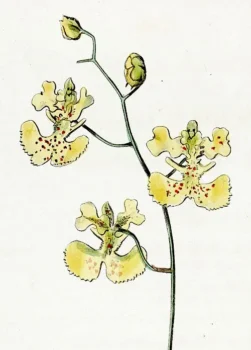
Oncidium lemonianum: A Charming Caribbean Dancing Lady Orchid
If you’re an orchid enthusiast looking to add a touch of Caribbean charm to your collection, Oncidium lemonianum might just be the delightful dancing lady you’ve been searching for. This lesser-known member of the Oncidium genus brings all the classic appeal of its more famous cousins, with yellow blooms that seem to flutter like tiny dancers in the breeze.
What Makes This Orchid Special?
Oncidium lemonianum (also known by its synonym Oncidium intermedium Bertero) is a compact epiphytic orchid that produces clusters of small, cheerful yellow flowers adorned with distinctive brown markings. Like other members of the dancing lady orchid family, the blooms have a whimsical appearance that resembles a figure in a flowing dress, complete with outstretched arms.
Where Does It Come From?
This tropical beauty hails from the warm Caribbean region, particularly Cuba and surrounding islands, where it grows naturally as an epiphyte on trees in humid, tropical environments. In its native habitat, it enjoys the dappled sunlight filtering through forest canopies and the constant moisture from tropical air.
Is This Orchid Right for Your Garden?
Here’s the honest truth: Oncidium lemonianum isn’t your typical garden center find, and it’s definitely not a plant for beginners or those living in cooler climates. This orchid is best suited for:
- Serious orchid collectors with greenhouse facilities
- Gardeners in USDA zones 10-12 who can provide year-round tropical conditions
- Indoor growers with experience caring for epiphytic orchids
- Those who enjoy the challenge of growing specialized plants
Growing Conditions That Make It Happy
Think of Oncidium lemonianum as a bit of a diva – it knows what it wants and won’t settle for less! Here’s what this tropical beauty craves:
- Light: Bright, indirect light (never direct sun which can scorch the leaves)
- Humidity: High humidity levels of 50-70%
- Air circulation: Good airflow to prevent fungal issues
- Temperature: Warm conditions year-round, ideally 65-85°F
- Growing medium: Well-draining orchid bark mix or mounted on cork bark
Planting and Care Tips
Successfully growing Oncidium lemonianum is all about mimicking its natural epiphytic lifestyle:
- Mounting: Consider mounting on cork bark or tree fern fiber for the most natural growing experience
- Potting: If using a pot, choose a well-draining orchid mix with plenty of bark chunks
- Watering: Water regularly but allow to dry slightly between waterings – soggy roots are a death sentence
- Fertilizing: Feed monthly with a diluted orchid fertilizer during growing season
- Repotting: Only repot when the growing medium breaks down, typically every 2-3 years
The Reality Check
While Oncidium lemonianum is undeniably charming, it’s important to be realistic about its requirements. This isn’t a plant you can stick in your backyard and forget about. It needs consistent tropical conditions, high humidity, and attentive care to thrive.
For gardeners in temperate climates who want to incorporate native or naturalized orchids into their landscapes, consider researching orchid species that are actually native to your region. Many areas have beautiful terrestrial orchids that are better suited to local growing conditions and support local ecosystems.
Is It Worth the Challenge?
For orchid enthusiasts who have the right growing conditions and experience, Oncidium lemonianum can be a rewarding addition to a specialized collection. Its compact size makes it manageable for greenhouse growing, and when it blooms, those dancing yellow flowers are sure to bring a smile to your face.
Just remember: this is a plant for the dedicated orchid lover, not the casual gardener. If you’re up for the challenge and can provide the tropical conditions it needs, this little Caribbean dancer might just steal your heart.