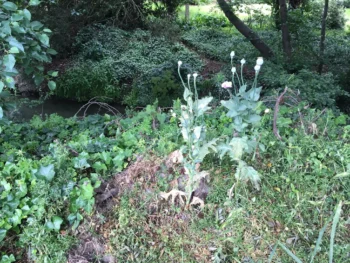
Opium Poppy: A Beautiful but Problematic Garden Annual
The opium poppy (Papaver somniferum) presents gardeners with quite the dilemma. This striking annual produces some of the most gorgeous flowers you’ll find – large, papery blooms in dreamy shades of white, pink, red, and purple that seem to glow in the garden. But there’s a significant catch that every gardener needs to know about before considering this plant.
What Makes Opium Poppy Special
Opium poppy is an annual forb that grows as a non-woody plant, completing its entire life cycle in one growing season. The flowers are truly spectacular – often reaching 4-6 inches across with delicate, crinkled petals that look like they’re made of silk tissue paper. After the flowers fade, distinctive blue-green seed pods develop, which are prized by flower arrangers and craft enthusiasts.
The plant itself features attractive blue-green foliage that provides a lovely backdrop for the showy blooms. It’s this combination of stunning flowers and ornamental seed heads that has made opium poppy a sought-after garden plant for centuries.
Native Status and Distribution
Opium poppy is not native to North America. Originally from the Mediterranean region and Asia Minor, it’s classified as a non-native species that has been introduced and now reproduces spontaneously in the wild across much of the United States and Canada. You can find it growing in states from coast to coast, including Alabama, California, New York, Texas, and many others, as well as in several Canadian provinces.
- Species observed
- No observations
The Legal Concern Every Gardener Must Know
Here’s where things get complicated: while opium poppy is undeniably beautiful, it’s also the source of opium and its derivatives. In the United States, growing opium poppies can be legally problematic. While the seeds themselves are legal to possess and even sold as food (think poppy seed bagels!), growing the plants may violate federal laws depending on intent and local regulations.
Many gardeners unknowingly grow these plants, attracted by their beauty and the fact that seeds are readily available. However, the legal gray area makes this a risky choice for home gardeners.
Growing Conditions and Care
If you’re in a location where growing opium poppy is clearly legal and appropriate, here’s what the plant needs:
- Sunlight: Full sun for best flowering
- Soil: Well-drained soil; tolerates poor soils once established
- Water: Drought tolerant after establishment, prefers not to be overwatered
- Climate: Grows as an annual in USDA zones 3-9, prefers cool weather
Planting and Propagation
Opium poppies are grown from seed and should be direct sown in the garden, as they don’t transplant well due to their long taproot. The seeds need cold stratification and are typically sown in fall or very early spring. They readily self-seed, which can lead to volunteer plants appearing in subsequent years.
Wildlife and Pollinator Benefits
The flowers attract bees and other pollinators, though they produce pollen rather than nectar. The seeds can provide food for birds, though this varies by location and local wildlife populations.
Better Alternatives for Your Garden
Given the legal complications, consider these beautiful native alternatives that provide similar garden appeal:
- California poppy (Eschscholzia californica) – bright orange blooms, drought tolerant
- Prickly poppy (Argemone species) – white flowers with prominent stamens
- Wood poppy (Stylophorum diphyllum) – yellow flowers, shade tolerant
- Bloodroot (Sanguinaria canadensis) – early spring white flowers
The Bottom Line
While opium poppy is undeniably gorgeous and not considered invasive, the legal complexities surrounding this plant make it a poor choice for most home gardeners. Instead, explore the many native poppy relatives and other wildflowers that can provide similar beauty without the legal concerns. Your garden can be just as stunning with plants that support local ecosystems and won’t potentially land you in hot water with the law.
Remember: when in doubt, choose native plants that support local wildlife and pollinators while avoiding any legal gray areas. Your garden – and your peace of mind – will thank you for it.