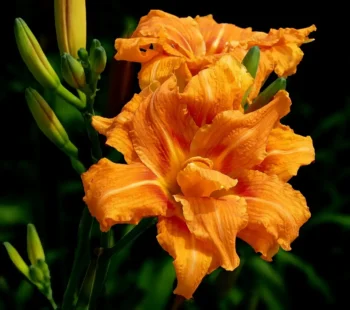
Orange Daylily: The Beautiful but Problematic Garden Escape
If you’ve ever driven through the countryside in summer and noticed bright orange trumpet-shaped flowers blooming along roadsides and in ditches, you’ve likely spotted the orange daylily (Hemerocallis fulva). While this perennial might seem like a gardener’s dream with its low-maintenance nature and cheerful blooms, there’s more to this story than meets the eye.
What Exactly Is Orange Daylily?
Orange daylily is a non-native perennial forb that originally hails from Asia, including China, Korea, and Japan. Despite its common name, it’s not actually a true lily at all! Each vibrant orange flower lasts just one day (hence daylily), but the plant produces multiple buds that ensure weeks of continuous blooming throughout mid to late summer.
This hardy perennial forms dense clumps of long, arching green foliage that can reach 2-4 feet in height and spread even wider. The plant reproduces through underground rhizomes, creating expanding colonies over time.
Where You’ll Find Orange Daylily
Orange daylily has established itself across most of North America, thriving in states from Alabama to Wyoming, and extending into several Canadian provinces including New Brunswick, Nova Scotia, Ontario, Prince Edward Island, and Quebec. It’s incredibly adaptable and can be found growing wild in a variety of habitats.
- Species observed
- No observations
The Problem with This Pretty Flower
Here’s the important part: Orange daylily is classified as invasive in Delaware and has naturalized throughout much of North America. While it may look harmless, this aggressive spreader can outcompete native plants and disrupt local ecosystems. Its ability to reproduce both through seeds and underground rhizomes makes it particularly effective at colonizing new areas.
In most regions, orange daylily is classified as Obligate Upland or Facultative Upland, meaning it typically grows in non-wetland areas but may occasionally appear in wetland edges.
Why You Should Think Twice About Planting It
While orange daylily is undeniably tough and low-maintenance, there are several reasons to reconsider adding it to your garden:
- Invasive tendencies: It can quickly take over garden beds and escape into natural areas
- Limited wildlife value: It provides minimal benefits to native pollinators and wildlife compared to native alternatives
- Difficult to remove: Once established, the extensive rhizome system makes it challenging to eliminate
- Aggressive spreading: It can crowd out more desirable native plants
Better Native Alternatives to Consider
Instead of orange daylily, consider these beautiful native alternatives that offer similar garden appeal while supporting local ecosystems:
- Wild bergamot (Monarda fistulosa): Lavender-pink flowers beloved by pollinators
- Black-eyed Susan (Rudbeckia species): Cheerful yellow blooms that attract butterflies and birds
- Wild columbine (Aquilegia canadensis): Delicate red and yellow flowers perfect for woodland gardens
- Butterfly milkweed (Asclepias tuberosa): Brilliant orange flowers that support monarch butterflies
If You Already Have Orange Daylily
If orange daylily has already established itself in your garden, consider gradually replacing it with native alternatives. Remove spent flower heads before they can set seed, and be vigilant about preventing its spread to natural areas. Complete removal requires digging up all rhizomes, which can be a multi-year process.
The Bottom Line
While orange daylily’s hardiness and bright blooms might seem appealing, its invasive nature and limited ecological value make it a poor choice for responsible gardeners. By choosing native alternatives, you’ll create a more sustainable garden that supports local wildlife while still enjoying beautiful, low-maintenance blooms. Your local ecosystem will thank you!