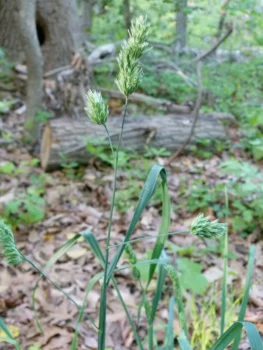
Orchardgrass: Should This European Import Have a Place in Your Garden?
If you’ve ever driven past a pastoral scene with rolling fields of tall, blue-green grass swaying in the breeze, there’s a good chance you were looking at orchardgrass (Dactylis glomerata). This perennial grass has been a fixture in North American landscapes for centuries, but its story is more complex than its peaceful appearance might suggest.
What Exactly Is Orchardgrass?
Orchardgrass is a non-native perennial grass that originally hails from Europe, western Asia, and northern Africa. Despite its common name, it has nothing to do with fruit orchards – the name likely comes from its historical use in orchard understories where it could tolerate partial shade better than many other grasses.
This robust grass forms dense clumps and can reach up to 3 feet in height. It’s what botanists call a bunch grass, meaning it grows in tufts rather than spreading by runners like some other grass species. The foliage is typically green with a slightly blue tint, and while it produces small, inconspicuous yellow flowers in mid-spring, don’t expect much of a floral show.
Where You’ll Find Orchardgrass
Orchardgrass has made itself at home across virtually all of North America. You can find it established in all 50 U.S. states, throughout Canada (from British Columbia to Newfoundland), and even in Hawaii, Alaska, and Puerto Rico. It’s particularly common in temperate regions and has become naturalized in many areas, reproducing and persisting without human intervention.
- Species observed
- No observations
It’s worth noting that in some areas, orchardgrass is regulated. In certain regions, it has restricted seed status, meaning there may be limitations on its sale or planting.
Growing Conditions and Hardiness
One reason orchardgrass has spread so successfully is its adaptability. This grass is quite the survivor, thriving in USDA hardiness zones 3 through 9. Here’s what it prefers:
- Soil: Medium-textured soils work best, though it’s fairly adaptable
- pH: Slightly acidic to neutral soils (pH 5.0-7.5)
- Moisture: Medium water requirements with moderate drought tolerance
- Light: Full sun to partial shade (more shade-tolerant than many grasses)
- Temperature: Can handle temperatures as low as -33°F
Orchardgrass typically grows in upland areas rather than wetlands, though it can occasionally appear in moist sites. It has moderate growth rate and remains active during spring and fall, going somewhat dormant during hot summer months.
Should You Plant Orchardgrass?
The answer depends entirely on your goals. Orchardgrass isn’t going to win any beauty contests – its flowers are small and unremarkable, and it doesn’t offer the ornamental appeal of many native grasses. However, it does have some practical applications:
Potential Benefits:
- Excellent for erosion control on slopes
- Tolerates foot traffic reasonably well
- Good for naturalizing large areas
- Provides some wildlife value (though limited)
- Hardy and low-maintenance once established
Potential Drawbacks:
- Not native to North America
- Limited aesthetic appeal
- Can be aggressive and difficult to remove
- Provides minimal benefits to pollinators (wind-pollinated)
- Wildlife use it primarily for cover, not food
Better Native Alternatives
Before planting orchardgrass, consider these native alternatives that offer similar benefits with greater ecological value:
- Little bluestem (Schizachyrium scoparium): Beautiful native bunch grass with stunning fall color
- Buffalo grass (Poaceae dactyloides): Drought-tolerant native perfect for low-maintenance areas
- Canada wild rye (Elymus canadensis): Tall native grass excellent for naturalized areas
- Prairie dropseed (Sporobolus heterolepis): Elegant native with fragrant flowers
If You Decide to Grow Orchardgrass
Should you choose to plant orchardgrass, it’s refreshingly easy to establish:
- Seeding: Plant seeds in spring or fall at a rate appropriate for your area
- Establishment: Seeds have high vigor and germinate readily
- Maintenance: Minimal care required once established
- Fertilization: Medium fertility requirements
- Mowing: Can be mowed if desired, regrows moderately well
Keep in mind that orchardgrass can be persistent once established, so plant it only where you’re certain you want it long-term.
The Bottom Line
Orchardgrass is a practical, no-nonsense grass that serves specific purposes well – mainly erosion control and low-maintenance ground cover in utility areas. However, for most garden applications, native alternatives will provide better ecological benefits and often superior aesthetics. If you’re looking to support local wildlife and pollinators while creating a beautiful landscape, consider exploring native grass options instead.
Remember, the best garden is one that reflects both your needs and your local ecosystem’s health. While orchardgrass isn’t harmful, choosing native plants when possible helps create a more resilient and ecologically valuable landscape.