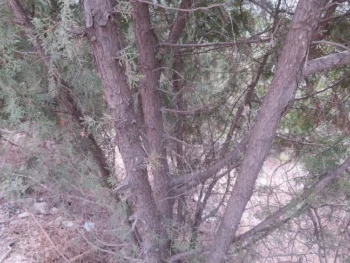
Oriental Arborvitae: A Versatile Evergreen for Your Landscape
Looking for an evergreen that can pull double duty as both a privacy screen and an attractive landscape focal point? Meet the Oriental arborvitae (Platycladus orientalis), a hardy conifer that’s been winning over gardeners with its distinctive foliage and reliable performance. While it may not be a native species, this adaptable evergreen has found a comfortable home in many American gardens.
What Is Oriental Arborvitae?
Oriental arborvitae is a perennial evergreen shrub or small tree that typically grows as a multi-stemmed woody plant. Don’t let the shrub classification fool you though – this vigorous grower can reach an impressive 40 feet tall at maturity, with some specimens hitting 35 feet by their 20th birthday. That’s what we call rapid growth!
You might also encounter this plant under its former scientific names, including Biota orientalis or Thuja orientalis, but Platycladus orientalis is the current accepted name in botanical circles.
Where Does It Grow?
Originally hailing from northwestern China and Korea, Oriental arborvitae has made itself at home in warmer parts of the United States. Currently, you’ll find established populations growing wild in Florida and Puerto Rico, where this non-native species has naturalized and reproduces on its own.
- Species observed
- No observations
What Does It Look Like?
Oriental arborvitae sports distinctive scale-like foliage arranged in flattened, vertical sprays that create a fine, dense texture. The bright green leaves maintain their color year-round, and the plant naturally forms an attractive pyramidal to columnar shape with a single crown growth form. In mid-spring, you might notice small yellow flowers, though they’re not particularly showy. The brown seed cones that follow are equally understated.
Growing Conditions and Care
One of Oriental arborvitae’s biggest selling points is its adaptability. This accommodating evergreen thrives in USDA hardiness zones 5-9, tolerating winter temperatures as low as -28°F. Here’s what it needs to flourish:
- Soil: Adaptable to coarse, medium, and fine-textured soils with a pH between 4.7 and 6.5
- Sunlight: Performs best in full sun but tolerates partial shade
- Water: Medium moisture requirements with medium drought tolerance once established
- Climate: Needs at least 110 frost-free days and 35-55 inches of annual precipitation
Planting and Care Tips
Getting your Oriental arborvitae off to a strong start is straightforward:
- Plant in spring after the last frost for best establishment
- Space plants 700-1100 per acre if creating a screen or windbreak
- Ensure good drainage – while adaptable, it doesn’t tolerate waterlogged conditions
- Seeds require cold stratification, so propagation by container or bare root is often easier
- Prune in late winter or early spring if shaping is needed
- This species has high hedge tolerance, making it excellent for formal pruning
Landscape Uses
Oriental arborvitae earns its keep in the landscape through versatility. Its dense, fine-textured foliage and rapid growth rate make it ideal for:
- Privacy screens and living fences
- Windbreaks and noise barriers
- Foundation plantings
- Specimen trees in formal landscapes
- Background plantings in mixed borders
Wildlife and Pollinator Value
As a conifer, Oriental arborvitae provides some wildlife benefits, primarily shelter and nesting sites for birds. However, it’s not considered a significant pollinator plant, and its wildlife value is generally lower compared to native alternatives.
Should You Plant It?
Oriental arborvitae can be a solid choice for gardeners seeking a reliable, fast-growing evergreen for screening or specimen use. It’s commercially available, easy to establish, and remarkably adaptable to different growing conditions.
However, if you’re passionate about supporting native ecosystems, consider these native alternatives that provide similar benefits:
- Eastern red cedar (Juniperus virginiana) for similar evergreen screening
- American arborvitae (Thuja occidentalis) in cooler climates
- Bald cypress (Taxodium distichum) for Southern gardens
Whatever you choose, Oriental arborvitae’s moderate lifespan and low-maintenance nature make it a practical option for gardeners who need reliable evergreen coverage without a lot of fuss. Just remember to give it room to grow – at 40 feet tall, this isn’t a plant that stays small!