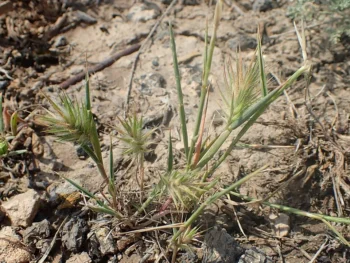
Oriental False Wheatgrass: An Uncommon Annual Grass Worth Knowing
If you’ve stumbled across the name Oriental false wheatgrass (Eremopyrum orientale) in your gardening research, you’re probably wondering what exactly this plant is and whether it belongs in your garden. This annual grass isn’t your typical garden center find, but understanding it can help you make informed decisions about the plants that might show up uninvited in your landscape.
What Is Oriental False Wheatgrass?
Oriental false wheatgrass is a small annual grass that’s part of the larger family of grasses and grass-like plants. Despite its common name suggesting a connection to wheat, this plant is quite different from the wheat we know and love. It’s also known by its scientific synonyms Agropyron orientale and Secale orientale, which you might encounter in older botanical references.
As an annual plant, Oriental false wheatgrass completes its entire life cycle in one growing season—germinating, growing, flowering, setting seed, and dying all within a single year.
Where Does It Come From and Where Is It Found?
This grass isn’t a North American native. Originally from the Mediterranean region and parts of western and central Asia, Oriental false wheatgrass has made its way to North America where it now grows wild in select locations. Currently, you’ll find established populations in British Columbia and Manitoba in Canada, as well as in New York state.
- Species observed
- No observations
Should You Plant Oriental False Wheatgrass?
Here’s the honest truth: Oriental false wheatgrass isn’t typically something you’d want to intentionally add to your garden. As a non-native species with limited ornamental value, it doesn’t offer much in the way of visual appeal or garden function. This small, inconspicuous grass produces narrow leaves and sparse seed heads that won’t wow anyone walking through your landscape.
Since this species can establish and persist without human intervention, there’s also the question of whether encouraging its spread is the best choice for local ecosystems, even though its current invasive status isn’t clearly documented.
Better Native Alternatives
If you’re interested in incorporating native grasses into your landscape, consider these wonderful North American alternatives:
- Little bluestem (Schizachyrium scoparium) – Beautiful fall color and excellent wildlife habitat
- Buffalo grass (Poaia dactyloides) – Perfect for low-maintenance lawns in appropriate climates
- Blue grama (Bouteloua gracilis) – Drought-tolerant with charming seed heads
- Purple needlegrass (Stipa pulchra) – California’s state grass with stunning purple-tinged plumes
Growing Conditions and Care
If you do encounter Oriental false wheatgrass growing on its own (perhaps in disturbed soil areas), it typically thrives in dry conditions and poor soils. This hardy little grass doesn’t require much in the way of care or attention—in fact, it’s quite content to fend for itself in challenging growing conditions where other plants might struggle.
As an annual, any plants you see will die back completely after setting seed, though new plants may emerge the following growing season if conditions are right.
Wildlife and Pollinator Value
Like most grasses, Oriental false wheatgrass is wind-pollinated rather than relying on insect pollinators, so it won’t contribute significantly to supporting bees, butterflies, or other beneficial insects in your garden. Its wildlife value is also quite limited compared to native grass species that have co-evolved with local wildlife over thousands of years.
The Bottom Line
While Oriental false wheatgrass isn’t necessarily harmful, it’s also not particularly beneficial for most gardening goals. If you’re passionate about growing grasses, you’ll find much more satisfaction and ecological value in choosing native species that support local wildlife and add genuine beauty to your landscape. Save your garden space and energy for plants that will truly shine in your outdoor space!