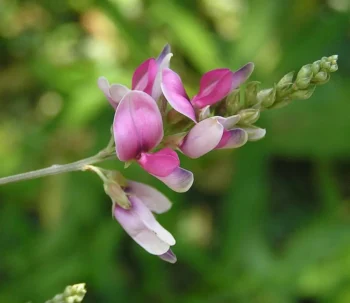
Oriental Lespedeza: A Lesser-Known Shrub Worth Understanding
If you’ve stumbled across the name Oriental lespedeza (Lespedeza formosa), you might be wondering what this plant is all about. This perennial shrub belongs to the broader lespedeza family, but it’s quite the mystery plant in the gardening world. Let’s dive into what we know about this uncommon species and whether it deserves a spot in your landscape.
What is Oriental Lespedeza?
Oriental lespedeza is a non-native perennial shrub that has established itself in the wild, particularly in Ohio. Like other members of the lespedeza family, it’s a multi-stemmed woody plant that typically stays under 13-16 feet tall, though it usually remains much smaller. You might also see it referenced by its synonym, Desmodium formosum.
Where Does It Grow?
Currently, Oriental lespedeza has been documented growing in Ohio, where it reproduces on its own without human intervention. This limited geographic distribution makes it quite rare compared to its more widespread cousins in the lespedeza family.
- Species observed
- No observations
The Big Question: Should You Plant It?
Here’s where things get interesting – and a bit complicated. While Oriental lespedeza isn’t listed as invasive or noxious, its non-native status and extremely limited documentation raise some red flags for native plant enthusiasts. The lack of detailed growing information and ecological data suggests this species hasn’t been thoroughly studied or widely cultivated.
Native Alternatives to Consider
Before diving into growing Oriental lespedeza, consider these fantastic native alternatives that offer similar shrub characteristics with well-documented benefits:
- Wild indigo (Amorpha species) – Native shrubs with attractive purple flower spikes
- New Jersey tea (Ceanothus americanus) – Compact native shrub with white flower clusters
- Spicebush (Lindera benzoin) – Native shrub that provides excellent wildlife habitat
- Ninebark (Physocarpus opulifolius) – Hardy native shrub with showy white flowers
Growing Conditions and Care
Unfortunately, specific growing requirements for Oriental lespedeza remain largely undocumented in horticultural literature. This lack of information makes it challenging to provide reliable planting and care advice. Most lespedeza species prefer well-drained soils and full sun, but without species-specific data, we can’t make definitive recommendations for L. formosa.
The Bottom Line
Oriental lespedeza presents a gardening puzzle. While it’s not considered harmful, its non-native status, limited range, and lack of horticultural information make it a questionable choice for most gardens. Your landscape dollars and efforts are likely better invested in well-documented native plants that provide proven benefits for local ecosystems and pollinators.
If you’re specifically interested in this plant for research purposes or have encountered it in the wild, consider consulting with local botanical experts or extension services who might have more detailed regional knowledge about this elusive species.