Oriental Mangrove: A Tropical Marvel for Waterfront Gardens
If you’ve ever dreamed of bringing a piece of tropical coastline to your garden, the Oriental mangrove (Bruguiera sexangula) might just be the extraordinary tree you’re looking for. This fascinating mangrove species offers a unique combination of distinctive architecture and ecological function that’s hard to find in any other tree.
What Makes the Oriental Mangrove Special
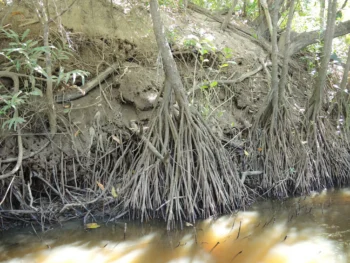
The Oriental mangrove is a perennial tree that naturally grows 13-16 feet tall (sometimes even taller under ideal conditions), creating an impressive presence in any landscape. What really sets this tree apart are its characteristic prop roots and pneumatophores—those quirky aerial roots that give mangroves their distinctive walking on water appearance. The dense, evergreen foliage provides year-round interest, while small tubular flowers eventually develop into fascinating propagules—baby plants that actually grow while still attached to the parent tree!
Where It Calls Home
Originally native to the Indo-Pacific region, including Southeast Asia, northern Australia, and various Pacific islands, the Oriental mangrove has established itself in Hawaii, where it grows in coastal wetland areas. In Hawaii, this species reproduces naturally and has become part of the local ecosystem.
- Species observed
- No observations
Garden Design Possibilities
The Oriental mangrove isn’t your typical backyard tree—it’s a specialty plant with very specific needs and uses. Here’s where it truly shines:
- Coastal restoration projects
- Unique specimen tree for tropical water gardens
- Erosion control along waterfront properties
- Botanical collections and educational landscapes
- Creating authentic tropical coastal aesthetics
Growing Conditions: Not for Every Garden
Here’s where things get interesting (and challenging). The Oriental mangrove is classified as an obligate wetland plant, meaning it almost always occurs in wetlands and has very specific requirements:
- Water needs: Requires saltwater or brackish water conditions—not just regular freshwater
- Climate: USDA zones 10-12 only (tropical climates)
- Light: Full to partial sun
- Soil: Salt-tolerant, waterlogged conditions
- Humidity: High humidity levels year-round
Planting and Care Tips
If you’re in the right climate and have the right conditions, here’s how to successfully grow an Oriental mangrove:
- Ensure consistent flooding or extremely wet soil conditions
- Provide access to saltwater or create brackish water conditions
- Protect from any cold temperatures or frost
- Minimal pruning required—let it develop its natural form
- Be patient with establishment, as mangroves can be slow to adapt initially
Wildlife and Pollinator Benefits
In tropical regions, Oriental mangroves support local ecosystems by providing nectar for various insects and birds. The complex root system also creates habitat for aquatic life in coastal environments.
Should You Plant One?
The Oriental mangrove is definitely not a plant for everyone. It requires very specific tropical, coastal conditions that most gardeners simply can’t provide. If you’re in zones 10-12 with access to saltwater conditions and are working on coastal restoration or creating an authentic tropical wetland garden, this could be an exciting addition.
However, if you’re looking for native alternatives for coastal gardens, consider researching mangrove species that are actually native to your specific region. In Florida, for example, red mangrove (Rhizophora mangle) might be a more appropriate choice for coastal restoration projects.
The Oriental mangrove is a remarkable tree that showcases the incredible adaptations plants have developed for life at the water’s edge. While it may not be suitable for most gardens, for those with the right conditions and conservation goals, it offers a unique opportunity to grow something truly extraordinary.