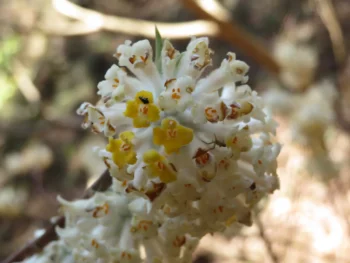
Oriental Paperbush: A Fragrant Winter Bloomer for Your Garden
If you’re looking for a shrub that breaks the winter doldrums with incredibly fragrant flowers, Oriental paperbush (Edgeworthia chrysantha) might just be your new best friend. This charming deciduous shrub brings a touch of the exotic to American gardens with its unusual winter blooms and delightful fragrance that can perfume an entire yard.
What is Oriental Paperbush?
Oriental paperbush is a perennial, multi-stemmed woody shrub that typically reaches 4-5 meters (13-16 feet) in height, though it usually stays more compact in garden settings. Originally from China and the Himalayas, this non-native species has found its way into American gardens and even naturalizes in some areas, particularly in Georgia where it reproduces spontaneously in the wild.
The plant is also known by several botanical synonyms, including Edgeworthia papyrifera and Edgeworthia tomentosa, though you’ll most commonly find it sold under its current name, Edgeworthia chrysantha.
Geographic Distribution
In the United States, Oriental paperbush has established populations primarily in Georgia, where it has naturalized and persists without human intervention. However, it’s cultivated in gardens throughout USDA hardiness zones 7-10.
- Species observed
- No observations
Why Gardeners Love Oriental Paperbush
The main draw of Oriental paperbush is its remarkable winter performance. When most of the garden is still sleeping, this shrub bursts into bloom with clusters of small, tubular yellow flowers that pack an incredible fragrant punch. The sweet, honey-like scent can be detected from quite a distance, making it a wonderful addition to pathways or areas where you’ll frequently pass by.
Beyond its famous flowers, Oriental paperbush offers:
- Attractive, textured bark that adds winter interest
- Unique branching pattern that creates architectural appeal
- Yellow fall foliage for seasonal color
- Early nectar source for pollinators when few other flowers are available
Garden Design and Landscape Use
Oriental paperbush works beautifully as a specimen plant where its winter flowers can be showcased and appreciated up close. It’s particularly well-suited for:
- Woodland gardens as an understory planting
- Asian-inspired or exotic garden themes
- Winter interest gardens
- Fragrance gardens near seating areas or walkways
- Mixed shrub borders for seasonal variety
Growing Conditions and Care
Oriental paperbush is relatively low-maintenance once established. Here’s what it needs to thrive:
Light: Partial shade works best, though it can tolerate some morning sun
Soil: Well-drained but consistently moist soil is ideal. It’s not particular about soil pH but appreciates organic matter
Water: Regular watering, especially during dry spells, but avoid waterlogged conditions
Protection: Plant in a location protected from harsh winds, which can damage the somewhat brittle branches
Planting and Care Tips
Getting your Oriental paperbush off to a good start is straightforward:
- Plant in spring or fall when temperatures are moderate
- Dig a hole twice as wide as the root ball but no deeper
- Apply a 2-3 inch layer of organic mulch around the base
- Water regularly the first year while roots establish
- Minimal pruning is needed – just remove any dead or damaged branches
- In colder zones, consider planting in a protected microclimate
Considerations for Native Plant Enthusiasts
While Oriental paperbush isn’t native to North America, it’s not currently listed as invasive or problematic. However, if you’re committed to native-only gardening, consider these wonderful native alternatives that also provide winter or early spring interest:
- Spicebush (Lindera benzoin) – native shrub with early spring flowers
- Serviceberry (Amelanchier species) – early spring white flowers
- Redbud (Cercis canadensis) – early spring pink flowers
- Witch hazel (Hamamelis species) – fragrant winter flowers
The Bottom Line
Oriental paperbush is a delightful addition to gardens in zones 7-10, especially if you’re looking to add winter fragrance and early season interest. While it’s not native, it’s generally well-behaved in cultivation and provides valuable early nectar for pollinators. Just be sure to give it the partial shade and consistent moisture it craves, and you’ll be rewarded with years of fragrant winter blooms that will make even the coldest days a little brighter.