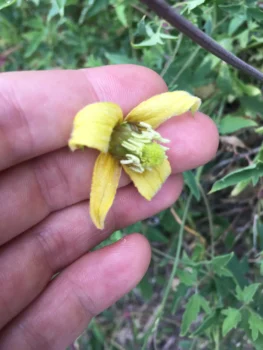
Oriental Virginsbower: A Late-Season Bloomer with Golden Charm
If you’re searching for a climbing plant that brings sunshine to your garden when summer starts winding down, Oriental virginsbower (Clematis orientalis) might catch your eye. This twining perennial vine offers something a bit different from the typical spring and early summer flower show, delivering its golden blooms just when you need them most.
What Is Oriental Virginsbower?
Oriental virginsbower is a perennial climbing vine that belongs to the clematis family. Also known by its scientific synonyms Clematis aurea and Viticella orientalis, this plant is a non-native species that has established itself in parts of North America. It’s a hardy climber that can scramble up fences, trellises, and other support structures with its twining stems.
Where Does It Grow?
This non-native vine has made itself at home in several states across North America, including Ontario, Colorado, Idaho, Nevada, New Mexico, and Utah. It reproduces on its own in the wild and has become naturalized in these areas, persisting without human intervention.
- Species observed
- No observations
The Appeal of Golden Blooms
What sets Oriental virginsbower apart is its timing and color. While many garden plants are calling it quits for the season, this vine is just getting started. In late summer and fall, it produces cheerful yellow, bell-shaped flowers that seem to glow in the autumn light. But the show doesn’t end there – after flowering, the vine develops fluffy, feathery seed heads that persist well into winter, adding textural interest to your garden when everything else has gone dormant.
Garden Design Potential
Oriental virginsbower shines in several garden situations:
- Covering unsightly fences or walls
- Adding vertical interest to flat landscapes
- Creating natural screens or privacy barriers
- Bringing late-season color to cottage gardens
- Thriving in xeriscapes and Mediterranean-style gardens
- Naturalizing in wild or informal garden areas
Growing Conditions and Care
One of Oriental virginsbower’s best qualities is its easygoing nature. This vine is quite forgiving and doesn’t demand perfect conditions to thrive.
Ideal Growing Conditions:
- Sunlight: Full sun for best flowering
- Soil: Well-draining soil; tolerates poor soils
- Water: Drought-tolerant once established
- Climate: Hardy in USDA zones 4-8
Planting and Care Tips:
- Plant in spring or fall when temperatures are moderate
- Provide a sturdy support structure – this vine can get quite robust
- Water regularly during the first year to help establish roots
- Once established, it’s remarkably drought-tolerant
- Prune lightly in early spring if needed to control size
- Mulch around the base to conserve moisture and suppress weeds
Wildlife and Pollinator Benefits
Oriental virginsbower isn’t just pretty to look at – it also provides value to wildlife. The flowers attract bees, butterflies, and other pollinators during its late-season blooming period, offering nectar when many other sources are becoming scarce. The seed heads may also provide material for birds to use in nest-building.
Should You Plant It?
Oriental virginsbower can be a valuable addition to gardens where late-season color and easy care are priorities. Its drought tolerance makes it particularly suitable for water-wise landscapes, and its robust nature means it can handle less-than-perfect conditions.
However, since this is a non-native species that has naturalized in the wild, you might want to consider native alternatives that could provide similar benefits while supporting local ecosystems. Some excellent native climbing alternatives include:
- Virgin’s bower (Clematis virginiana) – a native clematis with white flowers
- American bittersweet (Celastrus scandens) – offers colorful berries
- Wild grape (Vitis riparia) – provides food for wildlife
Whether you choose Oriental virginsbower or a native alternative, adding a climbing vine to your garden can bring vertical interest, seasonal color, and wildlife habitat to your outdoor space. Just remember to provide adequate support and enjoy the golden show this late-bloomer puts on year after year.