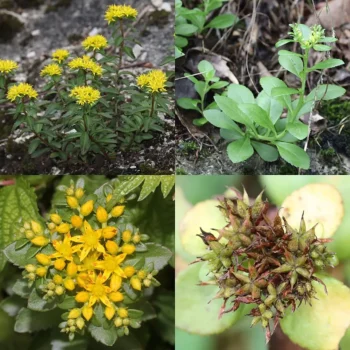
Orpin Aizoon: A Hardy Non-Native Succulent for Your Garden
Meet Orpin aizoon (Phedimus aizoon), a sturdy little succulent that’s been quietly making itself at home in gardens across North America. While it might sound fancy with its French-derived common name, this perennial forb is actually quite the unpretentious garden companion – though it’s important to know it’s not a native to our continent.
What Exactly Is Orpin Aizoon?
Orpin aizoon belongs to the stonecrop family and goes by several scientific aliases, including Sedum aizoon and Aizopsis aizoon – botanists just can’t seem to make up their minds sometimes! As a perennial forb, it’s a non-woody plant that comes back year after year, forming low-growing clumps of fleshy, succulent foliage.
Where You’ll Find It Growing Wild
This non-native plant has established itself across a surprising range of North American locations. In Canada, you can spot it in Alberta, Manitoba, New Brunswick, Ontario, Quebec, Saskatchewan, and even up in the Northwest Territories. South of the border, it’s made itself comfortable in Iowa, Massachusetts, Minnesota, New Hampshire, New Jersey, New York, and Pennsylvania.
- Species observed
- No observations
The Garden Appeal
What draws gardeners to Orpin aizoon? Its succulent leaves provide interesting texture and structure, while clusters of bright yellow, star-shaped flowers add cheerful color to the garden. The plant typically forms neat, spreading mats that work well as ground cover or in rock garden settings.
Should You Plant It?
Here’s where things get nuanced. Orpin aizoon isn’t considered invasive or noxious, so it won’t take over your neighborhood. However, as a non-native species, it doesn’t provide the same ecological benefits as plants that evolved alongside our local wildlife.
Reasons you might choose it:
- Extremely low maintenance once established
- Drought tolerant and hardy
- Attractive succulent foliage and flowers
- Works well in challenging growing conditions
Why you might skip it:
- Doesn’t support native pollinators and wildlife as effectively as native plants
- May spread beyond intended areas
- Takes space that could go to ecologically beneficial native species
Native Alternatives to Consider
If you’re drawn to Orpin aizoon’s succulent charm, consider these native alternatives that offer similar aesthetic appeal while supporting local ecosystems:
- Wild stonecrop (Sedum ternatum) – offers similar succulent texture with white flowers
- Prickly pear cactus (Opuntia species) – for truly drought-tolerant succulent appeal
- Wild ginger (Asarum canadense) – for low-growing ground cover in shadier spots
Growing Orpin Aizoon Successfully
If you decide to grow this hardy little succulent, you’ll find it refreshingly easy to please. Like most stonecrops, it thrives with minimal fuss – perhaps a bit too well, which is why it’s established itself so readily across North America.
Key growing requirements:
- Well-draining soil is absolutely essential
- Full sun to partial shade
- Hardy in USDA zones 3-9
- Drought tolerant once established
- Minimal fertilization needed
Planting and Care Tips
Plant Orpin aizoon in spring after the last frost. Space plants about 12 inches apart if using as ground cover. Water regularly the first season to help establish roots, then reduce watering significantly – overwatering is more likely to harm this plant than drought.
The beauty of this plant lies in its set it and forget it nature. Deadhead spent flowers if you want to prevent self-seeding, or leave them if you don’t mind the plant spreading naturally. Division every few years can help control spread and rejuvenate older clumps.
The Bottom Line
Orpin aizoon is like that reliable friend who’s always there when you need them – hardy, undemanding, and consistent. While it may not be the most exciting choice for supporting native wildlife, it certainly won’t cause problems in your garden either. If you’re looking for a low-maintenance succulent for challenging spots, it could work well, but consider pairing it with native plants that offer greater ecological value. After all, why not have the best of both worlds?