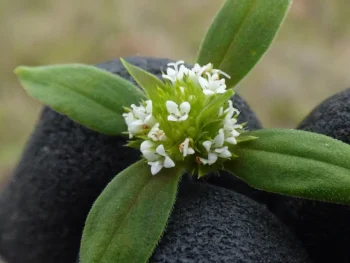
Pacific False Buttonweed: What You Need to Know About This Tiny Tropical Annual
If you’ve stumbled across the name Pacific false buttonweed while researching plants for your garden, you might be wondering what exactly this little-known species is all about. With its unassuming nature and somewhat mysterious growing habits, Spermacoce exilis is one of those plants that flies under the radar – but that doesn’t mean it’s not worth understanding.
Meet the Pacific False Buttonweed
Pacific false buttonweed goes by the botanical name Spermacoce exilis, and it’s a member of the coffee family (Rubiaceae). You might also see it referenced under old names like Borreria repens or Spermacoce mauritiana in some older gardening books, but these are outdated synonyms.
This little plant is what botanists call a forb – basically, it’s a soft-stemmed plant without any woody tissue above ground. Think of it as the opposite of a shrub or tree. It’s an annual, which means it completes its entire life cycle in one growing season.
Where Does It Come From?
Here’s where things get interesting: Pacific false buttonweed isn’t actually native to the Pacific regions where it’s commonly found today. It’s what we call a non-native species that has established itself in places like Hawaii, Guam, and Palau. The plant reproduces on its own in the wild and has managed to persist in these tropical and subtropical locations without human intervention.
- Species observed
- No observations
What Does It Look Like and How Does It Grow?
Pacific false buttonweed is a low-growing annual that stays close to the ground. As a forb, it produces small flowers and has a relatively delicate appearance compared to woody plants. Unfortunately, detailed information about its specific height, spread, and aesthetic qualities is limited, which tells us it’s probably not a showstopper in the garden world.
Garden and Landscape Considerations
If you’re thinking about incorporating Pacific false buttonweed into your landscape, here are some things to consider:
Growing Conditions
Based on its wetland status, this plant seems to prefer well-drained, upland conditions rather than soggy soils. In the Caribbean region, it’s classified as Obligate Upland, meaning it almost never occurs in wetlands. In Hawaii, it’s Facultative Upland, which means it usually grows in drier areas but can occasionally tolerate some moisture.
Climate Requirements
Given its current distribution in tropical locations like Hawaii, Guam, and Palau, Pacific false buttonweed likely prefers warm, frost-free climates year-round. However, specific USDA hardiness zone information isn’t readily available for this species.
Should You Grow Pacific False Buttonweed?
Here’s the honest truth: with limited information available about this plant’s garden performance, ornamental value, and potential impacts, it’s hard to make a strong case for actively seeking it out for your landscape. Since it’s a non-native species and we don’t have clear data on whether it might become problematic in certain areas, a cautious approach makes sense.
Consider Native Alternatives Instead
If you’re drawn to small annual flowers, consider exploring native options in your area that will:
- Support local wildlife and pollinators more effectively
- Be better adapted to your local growing conditions
- Contribute to regional biodiversity
- Often require less maintenance once established
The Bottom Line
Pacific false buttonweed is one of those plants that exists quietly in certain tropical locations without making much of a splash in the gardening world. While it’s not flagged as invasive or particularly problematic, its non-native status and the limited information available about its garden merits suggest that most gardeners would be better served by exploring native plant options.
If you’re passionate about supporting biodiversity and creating sustainable landscapes, focus your energy on discovering the native annual wildflowers and forbs that are indigenous to your specific region. Your local native plant society or extension office can point you toward species that will thrive in your area while supporting the intricate web of life that depends on native plants.
Sometimes the most responsible gardening choice is to appreciate a plant for what it is while choosing not to cultivate it – and Pacific false buttonweed might just fall into that category.