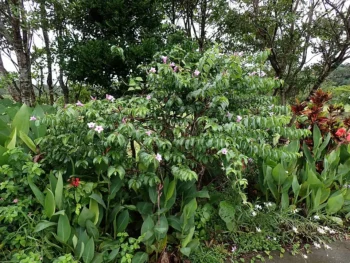
Palay Rubbervine: A Beautiful but Problematic Climbing Vine
If you’ve ever spotted a gorgeous purple-flowered vine scrambling up trees and fences in Florida or Texas, you might have encountered Palay rubbervine (Cryptostegia grandiflora). While this climbing beauty can certainly turn heads with its showy blooms, there’s more to this plant than meets the eye – and unfortunately, it’s not all good news for gardeners who care about native ecosystems.
What is Palay Rubbervine?
Palay rubbervine is a perennial climbing vine that originally hails from Madagascar and tropical Africa. This vigorous grower produces stunning funnel-shaped flowers that range from deep purple to pink, set against glossy green foliage. The plant gets its rubber name from the milky latex sap it produces when cut or damaged.
You might also see this plant listed under its botanical synonym, Nerium grandiflorum, in older gardening references.
Where Does It Grow?
In the United States, Palay rubbervine has established itself in Florida, Texas, Puerto Rico, and the Virgin Islands. As a non-native species, it reproduces on its own in the wild without any help from gardeners, which has allowed it to spread beyond cultivation.
- Species observed
- No observations
The Problem with Palay Rubbervine
Here’s where things get tricky. While Palay rubbervine is undeniably attractive, this vigorous climber has a dark side. Its aggressive growth habit allows it to smother native vegetation, and once established, it can be incredibly difficult to remove. The plant’s ability to reproduce spontaneously means that what starts as a single ornamental vine can quickly become a landscape management nightmare.
The vine’s twining, woody stems can grow quite long and will climb anything they can wrap around – trees, fences, buildings, and unfortunately, native plants that can’t compete with its vigor.
Growing Conditions and Characteristics
If you do encounter Palay rubbervine, here’s what you should know about its preferences:
- Hardiness: Thrives in USDA zones 9-11
- Light: Full sun to partial shade
- Soil: Adapts to various soil types but prefers well-draining conditions
- Water: Drought tolerant once established
- Wetland status: Usually grows in non-wetland areas but can adapt to wetland conditions
Wildlife and Pollinator Interactions
The showy flowers do attract butterflies and other pollinators, which might seem like a positive trait. However, the plant’s aggressive nature and potential to displace native species means that any pollinator benefits come at a significant cost to local ecosystems.
Our Recommendation: Skip This One
While we love helping gardeners grow beautiful plants, we can’t recommend planting Palay rubbervine. Its invasive tendencies and ability to harm native plant communities make it a poor choice for responsible gardeners.
Better Native Alternatives
Instead of Palay rubbervine, consider these native climbing alternatives that offer beauty without the ecological baggage:
- Coral Honeysuckle (Lonicera sempervirens): Beautiful red tubular flowers loved by hummingbirds
- Crossvine (Bignonia capreolata): Stunning orange and red trumpet-shaped blooms
- Carolina Jessamine (Gelsemium sempervirens): Fragrant yellow flowers that bloom in early spring
- Virginia Creeper (Parthenocissus quinquefolia): Fantastic fall color and excellent wildlife value
If You Already Have It
If Palay rubbervine has already established itself on your property, consider removal to prevent further spread. Be sure to wear gloves when handling the plant, as the milky sap can be irritating to skin. Complete removal typically requires cutting the vine and treating the root system, as this persistent plant can regrow from root fragments.
Remember, the most beautiful gardens are those that work in harmony with local ecosystems rather than against them. By choosing native alternatives, you’ll create a landscape that’s not only gorgeous but also supports the birds, butterflies, and other wildlife that call your area home.