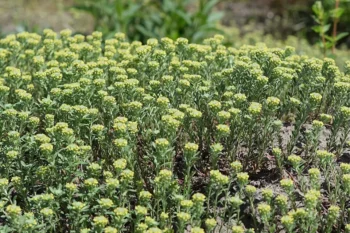
Pale Madwort: A Small but Mighty Ground Cover for Challenging Spots
If you’re looking for a low-maintenance plant that can handle tough growing conditions, pale madwort (Alyssum alyssoides) might just be the unsung hero your garden needs. This diminutive annual has been quietly making itself at home across North America, and while it may not win any beauty contests, it certainly earns points for persistence and adaptability.
Getting to Know Pale Madwort
Pale madwort goes by the botanical name Alyssum alyssoides, and you might occasionally see it listed under its synonyms Alyssum calycinum or Clypeola alyssoides. This little forb—that’s garden-speak for a non-woody flowering plant—typically lives as an annual, though it sometimes decides to stick around for a second year as a biennial.
Originally hailing from Europe and western Asia, pale madwort has established itself as a non-native resident across much of Canada and the United States. You’ll find it growing in Alberta, British Columbia, Manitoba, Ontario, Quebec, and Saskatchewan, as well as in numerous U.S. states from coast to coast, including Arkansas, California, Colorado, Connecticut, Idaho, Illinois, Indiana, Iowa, Kansas, Kentucky, Louisiana, Maine, Maryland, Massachusetts, Michigan, Minnesota, Missouri, Montana, Nebraska, Nevada, New Jersey, New Mexico, New York, Ohio, Oregon, Pennsylvania, Rhode Island, South Dakota, Tennessee, Utah, Vermont, Virginia, Washington, West Virginia, Wisconsin, and Wyoming.
- Species observed
- No observations
What Does Pale Madwort Look Like?
Don’t expect this plant to make a bold statement in your garden—pale madwort is more of a wallflower type. It forms low, spreading mats with tiny white flowers clustered at the stem tips. The flowers are delicate and understated, measuring only a few millimeters across. The leaves are narrow and fine, giving the plant an almost wispy appearance. While it won’t stop traffic, there’s something charming about its modest, cottage garden appeal.
Where Pale Madwort Shines in Your Garden
This tough little plant excels in spots where other plants might struggle. Consider pale madwort for:
- Rock gardens and crevices between stones
- Sandy or gravelly areas with poor soil
- Naturalized meadow plantings
- Dry slopes or challenging terrain
- Areas where you want low-maintenance ground cover
Because it’s a forb that stays close to the ground, pale madwort works well as an understory plant or filler between larger perennials and shrubs.
Growing Conditions and Care
One of pale madwort’s best qualities is its easygoing nature. This plant thrives in USDA hardiness zones 3-9 and isn’t particularly fussy about its growing conditions. It prefers:
- Well-draining, sandy or rocky soils
- Full sun to partial shade
- Dry to moderately moist conditions
- Poor to average soil fertility
Once established, pale madwort is remarkably drought-tolerant and requires minimal care. In fact, too much attention in the form of rich soil or regular watering might actually make it less happy.
Planting and Propagation Tips
Pale madwort is refreshingly simple to grow. You can direct seed it in either fall or spring, and it often self-seeds once established. Simply scatter seeds on prepared soil and lightly rake them in—no need for deep planting or special treatment. The plant will handle the rest, often popping up in unexpected spots where conditions suit it.
Benefits for Pollinators and Wildlife
While pale madwort’s flowers are small, they do provide nectar for tiny pollinators, including small native bees and beneficial insects. Every little bit helps in supporting our pollinator populations, and plants that bloom over extended periods (as this one does) can provide consistent resources.
A Word About Native Alternatives
Since pale madwort isn’t native to North America, you might want to consider some indigenous alternatives that can provide similar benefits while supporting local ecosystems. Depending on your region, native options might include wild strawberry (Fragaria species), native sedums, or regional wildflowers that thrive in similar conditions.
The Bottom Line
Pale madwort may not be the star of your garden show, but it’s a reliable supporting actor that can fill difficult niches with minimal fuss. If you have challenging spots that need covering and you appreciate plants that take care of themselves, this modest little forb might just earn a place in your landscape. Just remember that since it’s a non-native species, it’s worth exploring native alternatives that might provide similar benefits while supporting your local ecosystem.