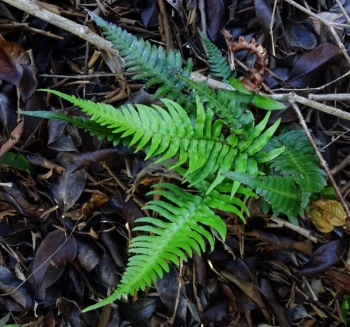
Palm Fern: A Graceful Addition to Shaded Hawaiian Gardens
Looking to add some lush, tropical texture to your shaded garden spaces? The palm fern (Blechnum appendiculatum) might just be the green companion you’re searching for. This elegant perennial fern brings a touch of New Zealand’s natural beauty to Hawaiian landscapes, though it’s worth understanding both its benefits and its non-native origins before adding it to your garden.
What Makes Palm Fern Special?
Palm fern earns its common name from its distinctive fronds that somewhat resemble miniature palm leaves. This attractive fern produces glossy green foliage that adds wonderful texture and visual interest to shaded areas where many other plants struggle to thrive. As a perennial, it provides year-round greenery once established, making it a reliable backbone plant for tropical and subtropical garden designs.
Native Status and Geographic Distribution
Here’s something important to know upfront: palm fern isn’t actually native to Hawaii. Originally from New Zealand and Australia, this fern has been introduced to Hawaii where it now reproduces spontaneously in the wild and tends to persist without human intervention. Currently, you’ll find it growing throughout the Hawaiian islands.
- Species observed
- No observations
Where Palm Fern Thrives
Palm fern is perfectly suited for USDA hardiness zones 9-11, making it well-adapted to Hawaii’s tropical climate. However, it’s quite particular about its growing conditions:
- Prefers partial to full shade (direct sunlight can scorch the fronds)
- Needs consistently moist, well-draining soil rich in organic matter
- Thrives in high humidity environments
- Classified as Facultative Upland, meaning it usually grows in non-wetland areas but can tolerate some wetland conditions
Garden Design and Landscape Role
Palm fern shines as an understory plant, filling those tricky shaded spots where grass won’t grow and flowers won’t bloom. It works beautifully in:
- Woodland gardens and forest edges
- Tropical and subtropical landscape designs
- Shade gardens beneath larger trees
- Areas with dappled sunlight
The fern’s medium size and attractive form make it excellent for adding layers and texture to your landscape design without overwhelming smaller plants nearby.
Growing Palm Fern Successfully
Want to try growing palm fern? Here are some practical tips for success:
- Soil preparation: Amend your planting area with plenty of compost or well-rotted organic matter
- Watering: Keep soil consistently moist but not waterlogged
- Location: Choose a spot with morning sun and afternoon shade, or dappled light throughout the day
- Maintenance: Remove old or damaged fronds regularly to keep the plant looking its best
Wildlife and Pollinator Considerations
Since ferns don’t produce flowers, palm fern won’t directly attract pollinators like bees and butterflies. However, it can provide habitat and shelter for small wildlife in your garden ecosystem.
Should You Plant Palm Fern?
While palm fern can be an attractive addition to Hawaiian shade gardens, it’s worth considering native Hawaiian fern alternatives first. Native plants are always the best choice for supporting local ecosystems and wildlife. Some beautiful native Hawaiian ferns to consider include:
- Hawaiian tree fern (Cibotium chamissoi)
- Kupukupu fern (Nephrolepis cordifolia)
- Palapalai fern (Microlepia strigosa)
If you do choose to plant palm fern, be a responsible gardener by keeping it contained to your landscape and preventing its spread into natural areas. With proper care and consideration, it can be a lovely addition to your shaded garden spaces while you work on incorporating more native plants into your overall landscape design.