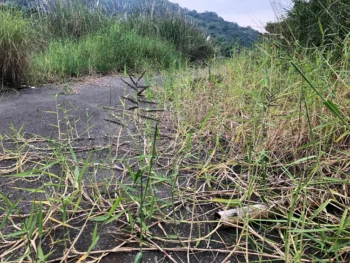
Para Grass: A Hardy Wetland Grass for Specialized Landscapes
If you’re looking for a tough, water-loving grass that can handle challenging conditions, para grass (Urochloa mutica) might catch your attention. This sturdy perennial grass, also known as California grass, has made itself at home in wetlands and moist areas across the southern United States. But before you decide whether it belongs in your landscape, let’s dig into what makes this grass tick.
What is Para Grass?
Para grass is a robust perennial grass originally from tropical Africa that has naturalized across many warm regions. It’s not your typical lawn grass – this is a heavy-duty plant that forms dense mats and can grow up to 3 feet tall. With its coarse texture and rapid growth rate, para grass is more about function than beauty.
You might also hear it called California grass or Californiagrass, though don’t let the name fool you – it’s found far beyond California’s borders. Botanically speaking, it goes by several scientific names due to taxonomic changes over the years, including Brachiaria mutica.
Where Does Para Grass Grow?
Para grass has established itself across the warmer parts of the United States, including Alabama, Florida, Hawaii, Maryland, Oregon, South Carolina, and Texas. You’ll also find it in U.S. territories like Guam, Palau, Puerto Rico, and the Virgin Islands. It thrives in USDA hardiness zones 9-11, where frost-free conditions allow it to grow year-round.
- Species observed
- No observations
A Non-Native with a Purpose
Let’s be upfront: para grass isn’t native to North America. It’s what botanists call a naturalized species – meaning it was introduced but now reproduces and persists on its own in the wild. While its invasive status isn’t definitively established, its non-native origins are worth considering when planning your landscape.
If you’re passionate about native plants, consider these native alternatives for wet areas:
- Switchgrass (Panicum virgatum) for prairies and wet areas
- Eastern gamagrass (Tripsacum dactyloides) for erosion control
- Various native sedges for wetland applications
What Does Para Grass Look Like?
Don’t expect ornamental elegance from para grass. This is a utilitarian plant with a sprawling, low-growing habit that spreads by stolons (horizontal stems). The foliage is green and coarse-textured, forming dense mats that stay thick year-round. Small, inconspicuous purple flowers appear throughout the year, followed by brown seeds – though neither adds much visual interest.
The plant’s decumbent growth form means it tends to sprawl and root along the ground, making it excellent for covering large areas quickly. With a rapid growth rate, it can establish and spread faster than many other grasses.
Where Para Grass Shines
Para grass isn’t destined for the ornamental border, but it excels in specific situations:
- Erosion control: Its dense root system and spreading habit make it excellent for stabilizing slopes and banks
- Wetland restoration: As a facultative wetland plant, it thrives in areas that are sometimes flooded
- Livestock forage: Though not its primary landscape use, it does provide decent grazing
- Low-maintenance ground cover: For areas where you need something tough and undemanding
Growing Conditions
Para grass is refreshingly adaptable when it comes to growing conditions. It handles various soil types – from coarse sandy soils to heavy clay – with equal enthusiasm. Here’s what it prefers:
- Moisture: Loves wet to moist conditions but shows medium drought tolerance once established
- Soil pH: Adaptable to a wide range from 5.3 to 8.7
- Light: Full sun to partial shade (intermediate shade tolerance)
- Climate: Needs warm conditions with at least 365 frost-free days
- Precipitation: Thrives with 30-200 inches of annual rainfall
Planting and Care
If you decide para grass fits your needs, establishment is straightforward:
- Propagation: Can be grown from seed, containers, or sprigs
- Seeding rate: About 425,000 seeds per pound, though seed establishment can be slow
- Planting density: 1,000 to 40,000 plants per acre depending on your goals
- Care: Once established, it’s remarkably low-maintenance
The plant spreads moderately through vegetative growth, so give it room to expand. Its medium fertilizer requirements mean you won’t need to pamper it with constant feeding.
Wildlife and Environmental Benefits
Para grass offers limited benefits to pollinators since it’s wind-pollinated with inconspicuous flowers. Its primary environmental benefit lies in erosion control and providing habitat structure in wetland areas, though specific wildlife benefits aren’t well-documented.
The Bottom Line
Para grass is a specialized plant for specialized situations. If you need tough, low-maintenance ground cover for wet areas, erosion control, or challenging sites where other plants struggle, it might be worth considering. However, its non-native status and coarse appearance make it unsuitable for most ornamental applications.
Before planting, consider whether native alternatives might better serve your needs and local ecosystem. If you do choose para grass, use it thoughtfully in areas where its practical benefits outweigh its aesthetic limitations.