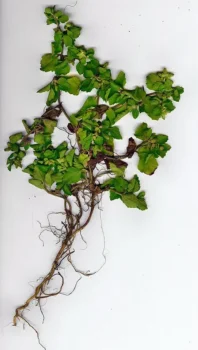
Paraguayan Starbur: A Weedy Wildflower You’ll Probably Want to Skip
If you’ve stumbled across small, prickly seed heads clinging to your socks after a walk through a weedy field, you might have encountered Paraguayan starbur (Acanthospermum australe). This unassuming little plant has quite the talent for getting around, but before you consider adding it to your garden, let’s dive into what makes this South American native tick—and why you probably don’t want it ticking in your backyard.
What Is Paraguayan Starbur?
Paraguayan starbur is a non-native annual or perennial forb that originally hails from South America, particularly Paraguay, Argentina, and southern Brazil. As a forb, it’s an herbaceous plant without woody stems, staying relatively close to the ground and producing those characteristic burr-like seed heads that give it its common name.
You might also see this plant listed under its synonyms Acanthospermum xanthioides or Melampodium australe in older gardening references, though these names are less commonly used today.
Where You’ll Find It
This adaptable little plant has made itself at home across a surprising number of U.S. states, including Alabama, Arkansas, Florida, Georgia, Hawaii, Louisiana, Massachusetts, Mississippi, New York, North Carolina, Oregon, Pennsylvania, South Carolina, Tennessee, Texas, and Virginia. It’s particularly well-established in the Southeast and has even island-hopped its way to Hawaii.
- Species observed
- No observations
Should You Grow Paraguayan Starbur?
Here’s where we need to have an honest conversation: Paraguayan starbur is generally considered a weedy species rather than an ornamental plant. While it does produce small yellow flowers that might catch your eye, this plant is more likely to be something you’re trying to manage rather than cultivate.
The Weedy Reality
Paraguayan starbur has several characteristics that make it less than ideal for most gardens:
- Produces spiny, clinging seed heads that stick to clothing and animal fur
- Tends to spread aggressively in suitable conditions
- Generally considered more of a pest than an ornamental
- Can compete with more desirable native plants
Better Native Alternatives
Instead of Paraguayan starbur, consider these native alternatives that offer similar growing conditions but with greater ecological benefits:
- Native sunflowers (Helianthus species)
- Black-eyed Susan (Rudbeckia species)
- Native asters (Symphyotrichum species)
- Tickseed (Coreopsis species)
These native alternatives will provide better support for local wildlife, including pollinators and birds, while adding genuine ornamental value to your landscape.
If You’re Stuck With It
Sometimes plants choose us rather than the other way around. If Paraguayan starbur has already established itself in your area, here’s what you should know:
Growing Conditions: This adaptable plant thrives in full sun and tolerates a wide range of soil conditions. It’s generally hardy in USDA zones 8-11, though it may behave as an annual in cooler regions.
Management Tips:
- Remove plants before they set seed to prevent spread
- Hand-pull small infestations when soil is moist
- Maintain healthy native plant communities to outcompete weedy species
- Consider professional consultation for large infestations
The Bottom Line
While Paraguayan starbur isn’t necessarily harmful, it’s not the best choice for intentional cultivation. Its weedy nature and tendency to produce clinging seed heads make it more of a garden challenge than a garden asset. Your time and garden space are better invested in native plants that will support local ecosystems while providing genuine ornamental value.
Remember, the best gardens work with nature rather than against it, and choosing plants that belong in your local ecosystem is always the way to go!