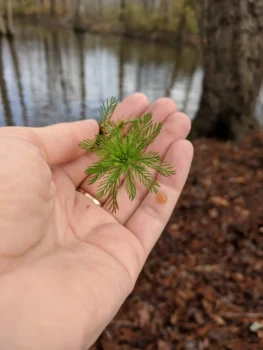
Parrot Feather Watermilfoil: A Beautiful but Dangerous Aquatic Invader
If you’ve ever seen the feathery, bright green foliage of parrot feather watermilfoil (Myriophyllum aquaticum) gracefully emerging from a pond or slow-moving stream, you might be tempted by its undeniable beauty. But before you even think about adding this plant to your water garden, there’s something crucial you need to know: this South American native has become one of North America’s most problematic aquatic invaders.
What is Parrot Feather Watermilfoil?
Parrot feather watermilfoil is a perennial aquatic plant that belongs to the forb family – meaning it’s an herbaceous plant without woody tissue. True to its name, the plant produces distinctive feathery, bright green leaves that emerge above the water surface, creating what initially appears to be an attractive display. As an obligate wetland species, it thrives in shallow water environments including ponds, lakes, and slow-moving streams.
Geographic Distribution and Invasive Status
Originally from South America, this plant has now established populations across much of North America, including 31 states and provinces from British Columbia to Florida. But here’s where things get concerning – parrot feather watermilfoil isn’t just widespread, it’s officially recognized as invasive or prohibited in multiple jurisdictions:
- Alabama: Category 1 invasive species and Class C noxious weed
- Connecticut: Potentially invasive and prohibited
- Michigan: Watch list species and prohibited
- Minnesota: Regulated species
- Wisconsin: Prohibited
- And several other states with similar restrictions
- Species observed
- No observations
Why You Should Never Plant Parrot Feather Watermilfoil
Despite its attractive appearance, parrot feather watermilfoil is an ecological nightmare waiting to happen. Here’s why this plant should never find its way into your garden or water feature:
Aggressive Spread: This plant reproduces rapidly through fragmentation, meaning even tiny plant pieces can establish new colonies. A single broken stem can start an entirely new infestation.
Dense Mat Formation: Once established, parrot feather creates thick, impenetrable mats that crowd out native aquatic plants and disrupt entire aquatic ecosystems.
Difficult to Control: Its aggressive growth habit and ability to regrow from fragments makes it extremely challenging and expensive to manage once established.
Legal Issues: In many areas, planting or transporting this species is actually illegal and can result in fines.
Native Alternatives for Your Water Garden
Instead of risking ecological disaster with parrot feather watermilfoil, consider these beautiful native aquatic plants that provide similar aesthetic appeal without the invasive problems:
- American water milfoil (Myriophyllum sibiricum): Offers similar feathery foliage but stays well-behaved
- Wild celery (Vallisneria americana): Provides graceful underwater movement
- Arrowhead (Sagittaria latifolia): Features attractive arrow-shaped leaves and white flowers
- Pickerelweed (Pontederia cordata): Produces beautiful blue flower spikes
- Water lily species native to your region: Classic beauty that supports local wildlife
What to Do If You Spot It
If you discover parrot feather watermilfoil in local waterways, contact your state’s invasive species program immediately. Early detection and rapid response are crucial for preventing its spread. Never attempt to remove it yourself without proper guidance, as improper removal can actually spread the problem.
The Bottom Line
While parrot feather watermilfoil might look appealing with its lush, feathery foliage, its invasive nature makes it a gardening choice you’ll regret. The risk to our native ecosystems, combined with potential legal consequences, makes this one plant that should definitely stay off your wish list. Stick with native alternatives that provide beauty without the ecological baggage – your local environment will thank you for it!
Remember: the best gardens are ones that work in harmony with nature, not against it. Choose native aquatic plants, and you’ll create a water feature that’s not only beautiful but also supports local wildlife and preserves the ecological integrity of your region.