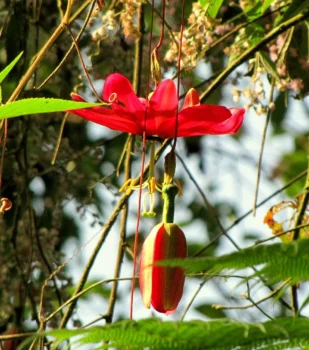
Red Banana Passionflower: A Stunning Tropical Climber for Your Garden
If you’re looking to add some serious tropical flair to your garden, the Red Banana Passionflower (Passiflora antioquiensis) might just be the showstopper you’ve been searching for. This spectacular climbing vine produces some of the most eye-catching flowers in the passionflower family, with blooms that look like they belong in a botanical fairy tale.
What Makes This Passionflower Special
Also known by its synonym Passiflora van-volxemii, this particular passionflower species stands out from its cousins with its striking red-orange flowers. The blooms are large and dramatic, featuring the characteristic passionflower corona that creates an almost alien-like appearance. The deep green, palmate leaves provide an attractive backdrop that makes those fiery flowers pop even more.
Where Does It Come From?
This beautiful vine calls the mountains of Colombia, particularly the Antioquia region, and parts of Ecuador home. In its native habitat, it thrives in the warm, humid conditions of tropical cloud forests, where it climbs through trees and shrubs to reach the light.
Should You Plant It?
Here’s the thing about Red Banana Passionflower – it’s absolutely gorgeous, but it comes with some considerations. Since it’s not native to most gardening regions, you’ll want to think about whether it’s the right fit for your space and local ecosystem.
Reasons you might love it:
- Stunning, unique flowers that are real conversation starters
- Attracts hummingbirds, butterflies, and bees
- Fast-growing vine that can quickly cover structures
- Adds exotic tropical appeal to gardens
Things to consider:
- Only hardy in USDA zones 9-11
- Requires warm, humid conditions to thrive
- Not native, so consider local native alternatives first
- Needs protection from frost and cold winds
Where It Shines in Your Landscape
This climbing vine is perfect for adding vertical interest to your garden. It loves to scramble up trellises, arbors, pergolas, and fences, creating a living wall of green punctuated by those incredible flowers. It’s particularly well-suited for:
- Tropical and subtropical gardens
- Conservatories and greenhouse spaces
- Courtyards and patios in warm climates
- Privacy screens with a wow factor
Growing Conditions and Care
Think tropical paradise when it comes to growing conditions. Red Banana Passionflower wants:
- Temperature: Warm conditions year-round (zones 9-11)
- Light: Partial shade to full sun
- Soil: Well-draining, fertile soil
- Humidity: High humidity levels
- Water: Regular, consistent moisture
Planting and Care Tips
Getting your Red Banana Passionflower established and happy requires a bit of attention to detail:
- Provide a sturdy support structure from the start
- Plant in spring after all danger of frost has passed
- Mulch around the base to retain moisture
- Water regularly but ensure good drainage
- Feed monthly during growing season with balanced fertilizer
- Protect from cold winds and frost
- Prune lightly to maintain shape and remove dead growth
Wildlife Benefits
One of the best things about this passionflower is its appeal to pollinators. The large, nectar-rich flowers are magnets for hummingbirds, and you’ll likely see butterflies and bees visiting regularly. It’s like installing a wildlife café in your garden!
The Bottom Line
Red Banana Passionflower is undeniably stunning and can be a fantastic addition to warm climate gardens. However, since it’s not native to most areas, consider exploring native passionflower species first – you might find equally beautiful options that better support your local ecosystem. If you do decide to grow this tropical beauty, just make sure you can provide the warm, humid conditions it craves, and you’ll be rewarded with some of the most spectacular flowers you’ve ever seen climbing up your garden walls.