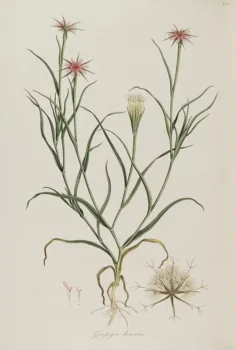
Pasture Goatsbeard: An Uncommon Annual Forb
If you’ve stumbled across the name pasture goatsbeard in your plant research, you’re looking at one of the more mysterious members of the goatsbeard family. Tragopogon hybridus, known by its common name pasture goatsbeard, is an annual forb that falls into that interesting category of plants that botanists know exists but don’t talk about much at garden parties.
What Exactly Is Pasture Goatsbeard?
Pasture goatsbeard is a non-native annual plant that belongs to the forb family – essentially, it’s an herbaceous plant without woody stems. Think of it as a cousin to dandelions and other plants in the sunflower family, but one that completes its entire life cycle in just one growing season.
As a forb, this plant produces stems and leaves that die back each year, with new plants growing from seed the following season. It’s what botanists call spontaneously reproducing, which is a fancy way of saying it can spread and establish itself without human help.
Where Does It Grow?
Currently, pasture goatsbeard has been documented growing in California. Its limited geographical distribution makes it something of a regional curiosity rather than a widespread garden staple.
- Species observed
- No observations
Should You Grow Pasture Goatsbeard?
Here’s where things get a bit tricky. While pasture goatsbeard isn’t considered invasive or harmful, detailed information about its garden performance, care requirements, and ecological benefits is surprisingly scarce. This makes it challenging to recommend for most gardening situations.
Since it’s non-native and we have limited information about its specific benefits to local wildlife or ecosystems, you might want to consider native alternatives instead:
- Native California annual wildflowers
- Regional forbs that support local pollinators
- Well-documented plants with known garden performance
The Mystery of Growing Conditions
Unfortunately, specific information about pasture goatsbeard’s preferred growing conditions, USDA hardiness zones, and care requirements isn’t readily available in standard horticultural resources. This lack of detailed cultivation information suggests it’s not commonly grown in gardens or widely studied by horticulturists.
What We Do Know
As an annual forb, pasture goatsbeard likely shares some characteristics with its better-known relatives:
- Completes its life cycle in one growing season
- Produces seeds that can establish new plants
- Grows as a herbaceous (non-woody) plant
- Currently found in California environments
The Bottom Line
Pasture goatsbeard represents one of those interesting botanical puzzles – a plant that exists and has been classified, but doesn’t have the detailed growing information that most gardeners rely on. If you’re curious about this species, you might be better served exploring well-documented native alternatives that can provide reliable garden performance and known benefits to local wildlife.
Sometimes the most responsible gardening choice is choosing plants we understand well over those that remain mysteries. Your local native plant society can help you discover beautiful, well-documented alternatives that will thrive in your specific region and support local ecosystems.