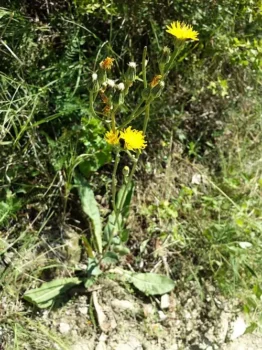
Pasture Hawksbeard: A Lesser-Known Perennial with Limited Garden Appeal
If you’ve stumbled across the name pasture hawksbeard (Crepis pannonica) while browsing plant lists or seed catalogs, you might be wondering what exactly this perennial forb brings to the garden table. Well, here’s the honest truth: this European import is something of a botanical mystery, with surprisingly little information available about its garden merits or growing requirements.
What Is Pasture Hawksbeard?
Pasture hawksbeard is a non-native perennial forb that belongs to the same family as dandelions and other composite flowers. As a forb, it’s an herbaceous plant without woody stems, meaning it dies back to the ground each winter and regrows from its roots in spring. The plant has established itself in the wild in at least Connecticut, where it reproduces without human assistance.
You might also see this plant listed under its synonym, Crepis rigida, in older botanical references, though Crepis pannonica is the currently accepted scientific name.
Geographic Distribution and Habitat
In North America, pasture hawksbeard has a surprisingly limited documented range, appearing only in Connecticut according to current distribution data. This narrow presence suggests either very specific habitat requirements or simply limited introduction and spread compared to other non-native species.
- Species observed
- No observations
Garden Considerations: The Reality Check
Here’s where things get interesting – or rather, where they don’t. Despite being a perennial that’s established itself in the wild, pasture hawksbeard seems to fly under the radar in gardening circles. There’s remarkably little information available about:
- Its mature size and growth rate
- Specific growing conditions and soil preferences
- Visual appeal and flowering characteristics
- Pollinator or wildlife benefits
- Cold hardiness zones
This lack of information isn’t necessarily a red flag, but it does suggest that pasture hawksbeard isn’t considered a standout garden performer. While it’s not listed as invasive or noxious, its limited presence and documentation make it an uncertain choice for home gardeners.
Better Alternatives: Native Hawksbeard Options
If you’re drawn to the hawksbeard family, consider exploring native alternatives that offer similar characteristics with documented garden value and ecological benefits. Native plants in the Asteraceae family provide reliable pollinator support and are better adapted to local growing conditions.
Before adding any non-native species to your garden, especially one with limited information available, it’s worth considering whether a native alternative might serve your landscaping goals more effectively while supporting local ecosystems.
The Bottom Line
Pasture hawksbeard remains something of an enigma in the gardening world. While not prohibited or problematic, its obscurity suggests limited ornamental or ecological value compared to better-documented alternatives. If you’re committed to growing this species, you’ll likely be pioneering its garden use – just be prepared for a lack of specific growing guidance and uncertain results.
For most gardeners, the time and space might be better invested in native species with proven track records for beauty, wildlife support, and reliable garden performance.