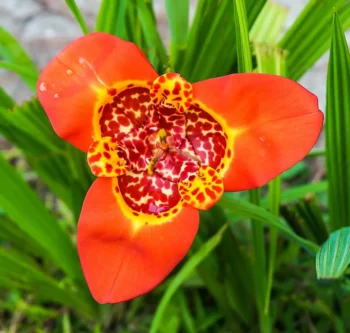
Peacock Flower (Tigridia): A Dazzling One-Day Wonder for Your Garden
If you’re looking for a flower that puts on a spectacular show—even if it’s just for a day—the peacock flower might be exactly what your garden needs. These stunning blooms live up to their common name with their flamboyant, peacock-like display of colors and patterns that’ll make your neighbors do a double-take.
What Makes Peacock Flowers Special?
Peacock flowers (Tigridia) are like the shooting stars of the flower world. Each individual bloom lasts only one day, but don’t let that discourage you! These bulbous perennials produce flowers in succession throughout their blooming season, so you’ll have weeks of daily surprises. The flowers feature three large, vibrant outer petals and three smaller inner petals adorned with distinctive spots—hence the peacock comparison.
Where Do They Come From?
These eye-catching plants are native to Mexico and Central America, where they’ve been dazzling gardeners for centuries. They’re not native to North America, but they’ve found their way into gardens worldwide thanks to their unique beauty and relatively easy care requirements.
Garden Design and Landscape Role
Peacock flowers work beautifully in several garden settings:
- Cottage gardens where their informal charm fits right in
- Mediterranean-style landscapes with other drought-tolerant plants
- Cutting gardens for unique floral arrangements
- Container gardens where you can move them around for best effect
- Mixed bulb plantings for extended seasonal interest
These plants typically reach 12-18 inches tall and spread about 6-8 inches wide, making them perfect for mid-border plantings or as accent plants among lower-growing companions.
Growing Conditions and Care
The good news is that peacock flowers aren’t particularly fussy. Here’s what they need to thrive:
- Sunlight: Full sun to partial shade (morning sun is especially appreciated)
- Soil: Well-draining soil is crucial—these bulbs will rot in soggy conditions
- Water: Moderate watering during growing season, drier conditions when dormant
- Hardiness: USDA zones 8-10; treat as annuals or lift bulbs in colder areas
Planting and Care Tips
Plant peacock flower bulbs in spring after the last frost date. Set them about 4 inches deep and 4-6 inches apart. In warmer climates, you can leave the bulbs in the ground year-round. In zones 7 and colder, you’ll need to dig up the bulbs after the foliage dies back in fall and store them indoors over winter.
During the growing season, provide regular water but let the soil dry out between waterings. A balanced fertilizer applied monthly during the growing season will keep them happy and blooming.
Wildlife and Pollinator Benefits
While they may not be native, peacock flowers do provide some benefits to local wildlife. Their nectar attracts bees and butterflies, contributing to pollinator support in your garden. The brief blooming period of each flower creates an interesting dynamic for pollinators, who must time their visits just right!
Should You Grow Peacock Flowers?
If you’re drawn to unique, conversation-starting flowers and don’t mind the daily drama of blooms that appear and disappear, peacock flowers can be a delightful addition to your garden. They’re not invasive and make excellent cut flowers for those who appreciate fleeting beauty.
However, if you’re focused on supporting native ecosystems, you might consider native alternatives that provide similar visual impact with greater ecological benefits. Native wildflowers and bulbs in your region will typically offer more substantial support for local wildlife while still delivering garden beauty.
Whether you choose peacock flowers or their native cousins, you’ll be adding drama and delight to your outdoor space—and isn’t that what gardening is all about?