The Sacred Fig: Growing and Understanding the Peepul Tree
If you’ve ever wondered about that majestic tree with the distinctive heart-shaped leaves that seems to dance in the slightest breeze, you might be looking at a peepul tree (Ficus religiosa). This fascinating species has quite a story to tell, and whether it belongs in your garden depends on several important factors.
What Exactly Is a Peepul Tree?
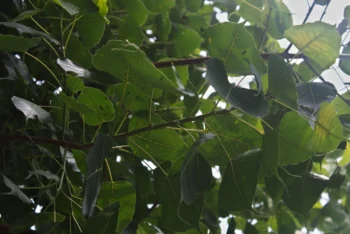
The peepul tree is a large, perennial tree that can grow well over 13-16 feet tall under the right conditions. What makes this tree instantly recognizable are its distinctive heart-shaped leaves with long, pointed tips called drip tips that help shed water efficiently. The leaves have an almost magical quality – they flutter and shimmer in even the gentlest breeze thanks to their flattened leaf stems.
Where Does It Come From and Where Does It Grow?
Originally native to the Indian subcontinent, including India, Nepal, and Sri Lanka, the peepul tree has found its way to warmer parts of the United States. Currently, you’ll find established populations in Florida and Puerto Rico, where this non-native species has adapted well to the climate and reproduces on its own.
- Species observed
- No observations
The Good, The Bad, and The Beautiful
Let’s be honest about what you’re getting into with a peepul tree:
The Appeal:
- Stunning visual impact with its large canopy and distinctive foliage
- Excellent shade provider for large properties
- Drought tolerant once established
- Relatively low maintenance
- Provides food for birds through its small fig fruits
The Challenges:
- Needs enormous space – this isn’t a tree for small yards
- Non-native species that may not support local ecosystems as well as native alternatives
- Limited to very warm climates (USDA zones 10-12)
- Can be messy when dropping leaves and fruits
Growing Conditions and Care
If you’re in the right climate zone and have the space, here’s what your peepul tree will need to thrive:
- Light: Full sun to partial shade
- Soil: Well-draining soil of various types
- Water: Regular watering during establishment, then quite drought tolerant
- Climate: USDA hardiness zones 10-12 only – this tree cannot handle frost
- Space: Plan for a massive canopy spread
Planting and Long-Term Care
When planting a peepul tree, think big picture – literally. Choose a location where it can reach its full potential without interfering with structures, power lines, or neighboring properties. Water regularly during the first few years to help establish a strong root system, then step back and let nature take its course. These trees need minimal pruning except for basic shaping or removing damaged branches.
Consider Native Alternatives
While the peepul tree isn’t considered invasive, choosing native species often provides better support for local wildlife and ecosystems. In Florida, consider native alternatives like:
- Live Oak (Quercus virginiana) for large shade trees
- Bald Cypress (Taxodium distichum) for dramatic height and form
- Southern Magnolia (Magnolia grandiflora) for evergreen beauty
The Bottom Line
The peepul tree is undeniably beautiful and can make a stunning specimen in the right setting. However, it’s really only suitable for gardeners in the warmest parts of the country with large properties to accommodate its size. If you meet these criteria and appreciate its unique aesthetic, it can be a rewarding addition to your landscape. Just remember to consider native alternatives that might provide similar benefits while better supporting your local ecosystem.
Whether you choose the peepul tree or opt for a native species, the key is selecting plants that match both your growing conditions and your long-term landscape goals. Happy gardening!