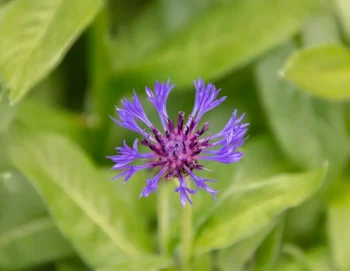
Perennial Cornflower: A European Beauty That’s Made Itself at Home
If you’ve ever spotted a cheerful blue flower with distinctively fringed petals dancing in the breeze, you’ve likely encountered the perennial cornflower (Centaurea montana). Also known as mountain knapweed or mountain-bluet, this charming European native has found its way into gardens across North America – and into the wild as well.
What Exactly Is Perennial Cornflower?
Despite its common name suggesting otherwise, perennial cornflower is actually a perennial forb – meaning it’s a non-woody flowering plant that comes back year after year. Originally from the mountainous regions of Europe, including the Alps and Pyrenees, this plant has established itself far from its homeland.
Perennial cornflower produces vibrant blue, daisy-like flowers with distinctively fringed petals that bloom from late spring into early summer. The gray-green foliage provides a lovely backdrop for the striking blooms, and the entire plant typically reaches 12-24 inches tall and wide.
Where You’ll Find It Growing
As a non-native species, perennial cornflower has naturalized extensively across North America. You can find it growing in Alaska, several Canadian provinces including British Columbia, Ontario, and Quebec, and numerous U.S. states from Maine to Washington and as far south as Pennsylvania and Utah.
- Species observed
- No observations
The plant thrives in USDA hardiness zones 3-8, making it well-suited to cooler climates that somewhat mirror its native European mountain habitat.
Should You Plant It in Your Garden?
This is where things get a bit complicated. Perennial cornflower is undeniably beautiful and easy to grow, which explains its popularity among gardeners. However, it’s worth considering that this European native has established itself quite successfully in North American ecosystems without invitation.
If you’re drawn to its cottage garden charm, here are some things to consider:
- The Good: Gorgeous blue flowers, attracts pollinators like bees and butterflies, drought tolerant, low maintenance
- The Concerning: Can spread aggressively, self-seeds readily, may outcompete native plants
- The Compromise: Deadhead spent flowers to prevent self-seeding, or consider native alternatives
Native Alternatives to Consider
If you love the look of perennial cornflower but prefer supporting native ecosystems, consider these beautiful alternatives:
- Wild bergamot (Monarda fistulosa) for purple-blue blooms
- New England aster (Symphyotrichum novae-angliae) for late-season blue flowers
- Wild lupine (Lupinus perennis) for spiky blue flower clusters
- Chicory (Cichorium intybus) for similar blue daisy-like flowers
Growing Perennial Cornflower Successfully
If you decide to grow perennial cornflower, the good news is that it’s refreshingly easy to please. Here’s what it needs to thrive:
Ideal Growing Conditions
- Light: Full sun to partial shade (morning sun with afternoon shade in hot climates)
- Soil: Well-draining soil of average fertility – it actually prefers not-too-rich conditions
- Water: Moderate water; drought tolerant once established
- Climate: Prefers cooler temperatures, struggles in hot, humid summers
Planting and Care Tips
- Plant in spring after the last frost or in early fall
- Space plants 12-18 inches apart to allow for spreading
- Deadhead spent flowers regularly to encourage more blooms and prevent self-seeding
- Divide clumps every 3-4 years in spring or fall to prevent overcrowding
- Cut back to ground level after first hard frost
Pollinator and Wildlife Benefits
One of perennial cornflower’s redeeming qualities is its appeal to beneficial insects. The nectar-rich flowers attract various bees, butterflies, and other pollinators. However, keep in mind that native plants typically provide more comprehensive support for local wildlife, including host plants for butterfly caterpillars and seeds for birds.
The Bottom Line
Perennial cornflower is a beautiful, low-maintenance plant that can add cottage garden charm to your landscape. However, its non-native status and tendency to spread mean it requires thoughtful management. If you choose to grow it, be a responsible gardener by preventing it from self-seeding and spreading beyond your intended planting area.
Consider it a gateway plant – enjoy its beauty while you research and gradually incorporate native alternatives that will provide even greater benefits to your local ecosystem. After all, the best gardens are those that are both beautiful and beneficial to the world around them.