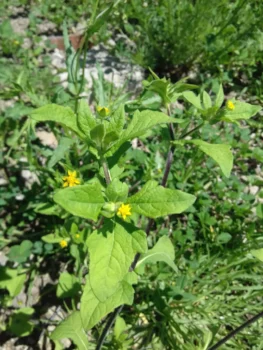
Perfoliate Blackfoot: What You Need to Know About This Lesser-Known Annual
If you’ve stumbled across the name perfoliate blackfoot in your plant research, you’ve discovered one of the more obscure members of the sunflower family. Scientifically known as Melampodium perfoliatum, this annual forb might catch your eye, but there are some important things to consider before adding it to your garden.
The Basics: What Is Perfoliate Blackfoot?
Perfoliate blackfoot is an annual forb—essentially a non-woody plant that completes its entire life cycle in one growing season. As a member of the Asteraceae (sunflower) family, it shares DNA with more familiar garden favorites like sunflowers, daisies, and black-eyed Susans.
The plant gets its perfoliate name from the way its leaves appear to be pierced by the stem—a distinctive characteristic that helps with identification. Don’t worry if you can’t pronounce it correctly; even seasoned gardeners sometimes stumble over botanical terms!
Where Does It Come From?
Here’s where things get interesting (and a bit complicated). Perfoliate blackfoot is not native to the United States. It’s been introduced and has established itself in California, where it now reproduces on its own in the wild. This means it’s what botanists call a naturalized species—essentially a plant immigrant that’s made itself at home.
- Species observed
- No observations
Should You Grow It in Your Garden?
This is where we need to have an honest conversation. While perfoliate blackfoot isn’t currently listed as invasive or noxious, its status as a non-native species that reproduces spontaneously in the wild raises some flags for environmentally conscious gardeners.
Consider Native Alternatives Instead
Before you decide to grow perfoliate blackfoot, consider these beautiful native alternatives that offer similar benefits:
- California goldfields (Lasthenia californica) – stunning yellow blooms
- Bigelow’s coreopsis (Coreopsis bigelovii) – cheerful daisy-like flowers
- Desert marigold (Baileya multiradiata) – long-blooming yellow flowers
- Tidy tips (Layia platyglossa) – charming white-tipped petals
Growing Conditions and Care
If you do choose to grow perfoliate blackfoot, here’s what we know about its preferences:
As an annual forb, it has a herbaceous growth habit without woody stems. The plant is considered facultative for wetland conditions in the Arid West, meaning it can tolerate both wet and dry conditions—a fairly adaptable characteristic that makes it relatively easy-going in the garden.
Unfortunately, specific information about ideal growing conditions, hardiness zones, and detailed care instructions for this particular species is limited. This lack of cultivation information is actually pretty common for lesser-known non-native species that haven’t been widely adopted by the gardening community.
The Bottom Line
While perfoliate blackfoot might seem like an interesting addition to your garden, the combination of its non-native status and limited growing information makes it a questionable choice for most gardeners. Your garden space is valuable real estate—why not use it to support native plants that provide proven benefits to local ecosystems?
Native plants have co-evolved with local wildlife, require less water and maintenance once established, and help support the complex web of life that makes our gardens truly vibrant. Plus, you’ll have access to much better growing information and local expertise!
If you’re drawn to the sunflower family’s cheerful blooms, stick with the native alternatives mentioned above. Your local pollinators, birds, and beneficial insects will thank you, and you’ll likely have much better success in your garden.