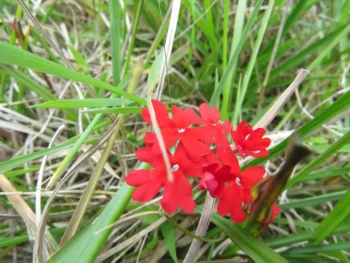
Peruvian Mock Vervain: A Non-Native Ground Cover Worth Knowing About
If you’ve stumbled across the name Peruvian mock vervain (Glandularia peruviana) in your gardening research, you might be wondering what exactly this plant is and whether it belongs in your garden. This lesser-known member of the verbena family has an interesting story to tell, and understanding its background can help you make an informed decision about whether it’s right for your landscape.
What Is Peruvian Mock Vervain?
Peruvian mock vervain is a perennial forb—essentially a non-woody flowering plant that comes back year after year. Don’t let the technical term forb intimidate you; it simply means this is an herbaceous plant without significant woody stems above ground. You might also see this plant listed under its synonyms Glandularia chamaedryfolia or Verbena peruviana in older gardening references.
As its common name suggests, this plant hails from South America, specifically Peru. However, it has found its way to North America, where it now grows and reproduces on its own in the wild, particularly in Illinois.
The Native Plant Conversation
Here’s where things get interesting from a native gardening perspective. Peruvian mock vervain is what we call a non-native species—it wasn’t originally found in North America but has been introduced and now reproduces spontaneously without human intervention. Currently found reproducing in Illinois, this plant has established itself in the lower 48 states.
- Species observed
- No observations
While it’s not currently listed as invasive or noxious, as native plant enthusiasts, we always encourage gardeners to consider native alternatives first. Native plants provide better support for local ecosystems, including our native pollinators and wildlife.
Garden Appeal and Growing Characteristics
If you’re curious about what Peruvian mock vervain brings to the table aesthetically, this low-growing plant produces clusters of small purple to violet flowers that can add color to informal garden settings. Its spreading habit makes it potentially useful as a ground cover in rock gardens or naturalized areas.
As a perennial, it offers the advantage of returning each growing season, and like many plants in the verbena family, it tends to attract butterflies and other small pollinators to the garden.
Growing Conditions and Care
Based on its South American origins and behavior in similar climates, Peruvian mock vervain likely thrives in:
- Full sun locations
- Well-draining soils
- Areas with moderate to low water once established
- USDA hardiness zones 8-10 (though this may vary)
The plant appears to be relatively low-maintenance and may self-seed in favorable conditions, which is something to keep in mind if you prefer more controlled garden growth.
Making the Right Choice for Your Garden
While Peruvian mock vervain isn’t inherently problematic, choosing native plants almost always provides greater benefits to your local ecosystem. If you’re drawn to the idea of a low-growing, purple-flowered ground cover, consider exploring native alternatives in the verbena family or other native plants with similar characteristics that are indigenous to your specific region.
Native alternatives not only support local wildlife but also tend to be better adapted to your local climate conditions, often requiring less water and maintenance once established.
The Bottom Line
Peruvian mock vervain represents one of many non-native plants that gardeners encounter in their plant research. While it’s not currently flagged as problematic, making space in our gardens for native species is one of the most impactful things we can do to support biodiversity and create resilient landscapes. If you’re set on growing this particular species, just be mindful of its potential to self-seed and consider balancing your plant choices with plenty of native options.