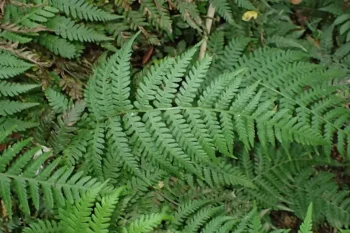
Petersen’s-Spleenwort: A Non-Native Fern with Limited Garden Appeal
If you’ve stumbled across the name Petersen’s-Spleenwort (Deparia petersenii) in your plant research, you might be wondering what exactly this fern is all about. Well, you’re not alone in your curiosity – this particular species doesn’t get much spotlight in the gardening world, and there’s a good reason for that.
What Is Petersen’s-Spleenwort?
Petersen’s-Spleenwort is a perennial fern that falls into the category of forbs – essentially, it’s a non-woody plant that comes back year after year. Like other spleenworts, this fern produces the characteristic fronds we associate with this plant family, but it’s not exactly what you’d call a garden showstopper.
This fern has quite the collection of scientific aliases, having been shuffled around taxonomically over the years. You might see it listed under various names in older references, but Deparia petersenii is the current accepted botanical name.
Where Does It Grow?
Here’s where things get interesting (and a bit concerning from a native gardening perspective). Petersen’s-Spleenwort is not native to the United States, yet it has established itself in several southeastern states including Alabama, Florida, Georgia, Louisiana, and Hawaii. It’s one of those plants that has managed to reproduce and persist in the wild without human intervention – essentially becoming naturalized in these regions.
- Species observed
- No observations
The Wetland Connection
One notable characteristic of this fern is its relationship with moisture. Depending on where you are in the country, Petersen’s-Spleenwort shows different preferences:
- In the Atlantic and Gulf Coastal Plain regions, it’s considered a facultative wetland plant, meaning it usually hangs out in wet areas but can tolerate drier conditions
- The same goes for the Eastern Mountains and Piedmont regions
- In Hawaii, it’s more flexible, equally happy in wet or dry locations
Should You Plant Petersen’s-Spleenwort?
Here’s the honest truth: there’s not a compelling reason to seek out this particular fern for your garden. While it’s not listed as invasive or noxious, its non-native status and limited ornamental appeal make it a less-than-ideal choice for most gardeners, especially those interested in supporting local ecosystems.
The bigger issue is that detailed growing information for this species is surprisingly scarce. We don’t have solid data on its specific growing requirements, propagation methods, or even its mature size and form. This makes it a bit of a gamble if you’re trying to plan a cohesive landscape design.
Better Native Alternatives
Instead of Petersen’s-Spleenwort, consider these native fern options that will better support your local ecosystem:
- Christmas Fern (Polystichum acrostichoides) – evergreen and adaptable
- Royal Fern (Osmunda regalis) – dramatic and moisture-loving
- Lady Fern (Athyrium filix-femina) – delicate and graceful
- Cinnamon Fern (Osmundastrum cinnamomeum) – distinctive and wildlife-friendly
The Bottom Line
While Petersen’s-Spleenwort might pop up in plant databases and botanical references, it’s not really a garden center darling – and that’s probably for the best. As native plant gardeners, we have so many beautiful, well-documented, and ecologically beneficial ferns to choose from that there’s little reason to gamble on a non-native species with limited growing information.
If you’re drawn to spleenworts specifically, research native species in your region that can provide similar aesthetic appeal while supporting local wildlife and fitting better into your area’s natural plant communities. Your garden (and local ecosystem) will thank you for it!